How Iontophoresis Works: A Complete Guide
Iontophoresis has been used to manage excessive sweating since the 1940s. Despite its long track record, many people living with hyperhidrosis in Australia and New Zealand have never heard of it, or assume it sounds more complicated than it is. This guide explains how iontophoresis works, what a treatment session actually involves, and what you can realistically expect.
What Is Iontophoresis?
Iontophoresis is a non-invasive, drug-free treatment for primary hyperhidrosis. It delivers a mild, controlled electrical current through ordinary tap water to the area being treated: the hands, feet, or underarms. Over a course of sessions, this process works to temporarily reduce sweat secretion in the treated areas. Iontophoresis is one of the most widely recommended treatments for palmar, plantar, and axillary hyperhidrosis, and is used in clinics and at home all over the world.
How Does It Work?
The exact mechanism of iontophoresis is still an area of ongoing research. The most widely accepted explanation is that the electrical current used during iontophoresis disrupts the connection between the sweat-stimulating nerves and the sweat glands, reducing the glands' ability to respond to those signals. Importantly, the sweat gland itself is not damaged. Only the nerve signalling pathway is affected. This is why the iontophoresis treatment needs to be repeated regularly to maintain results, and why the effect is fully reversible.
What Does a Session Look Like?
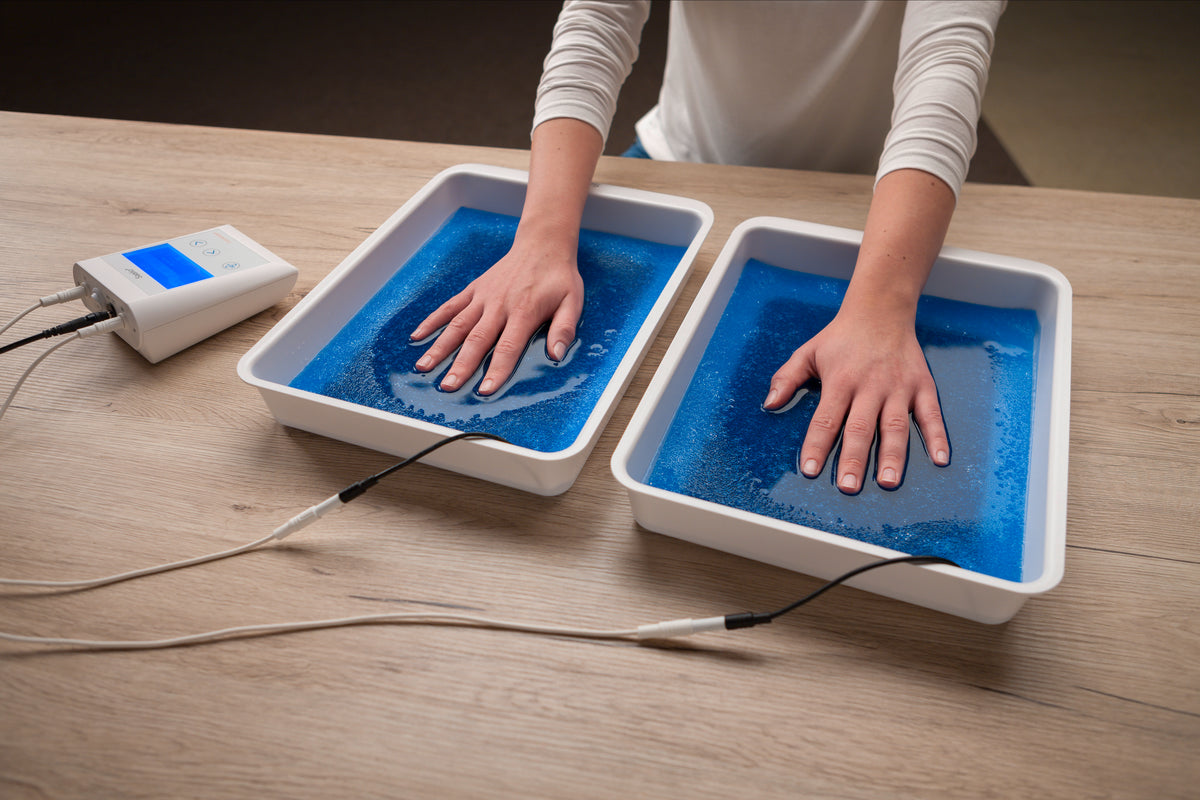
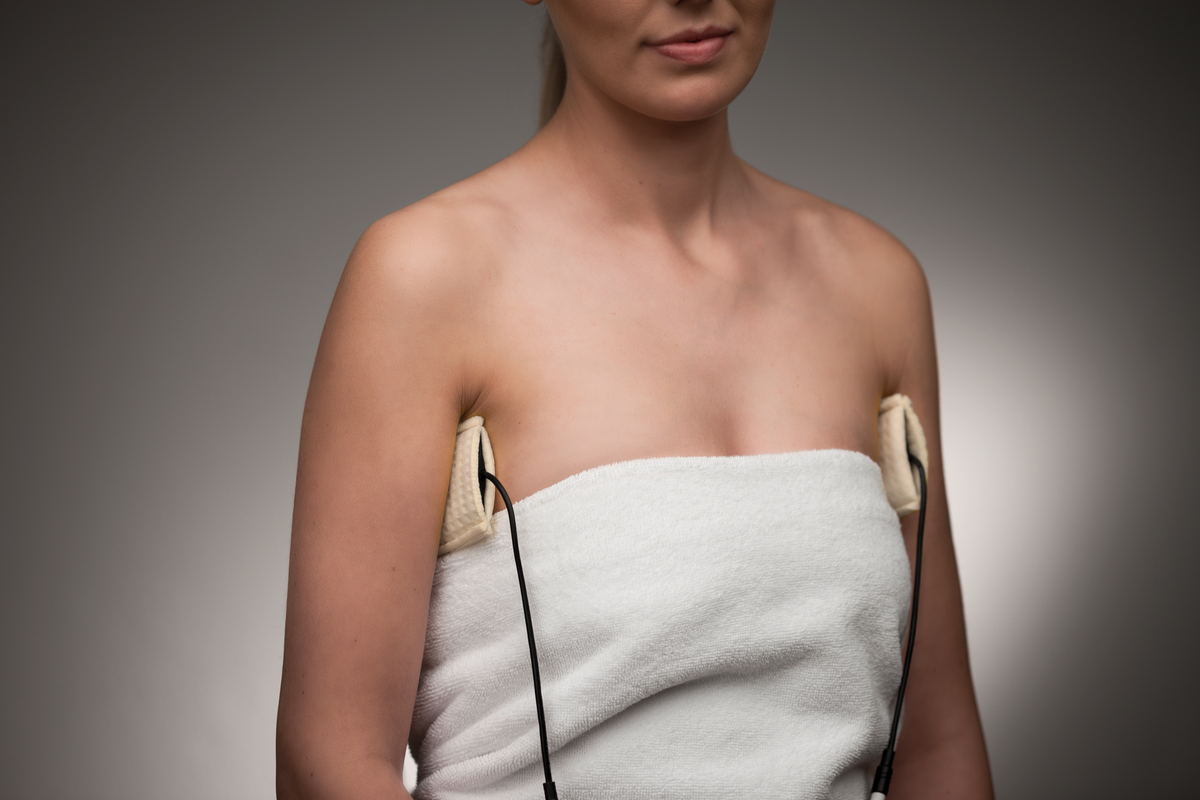
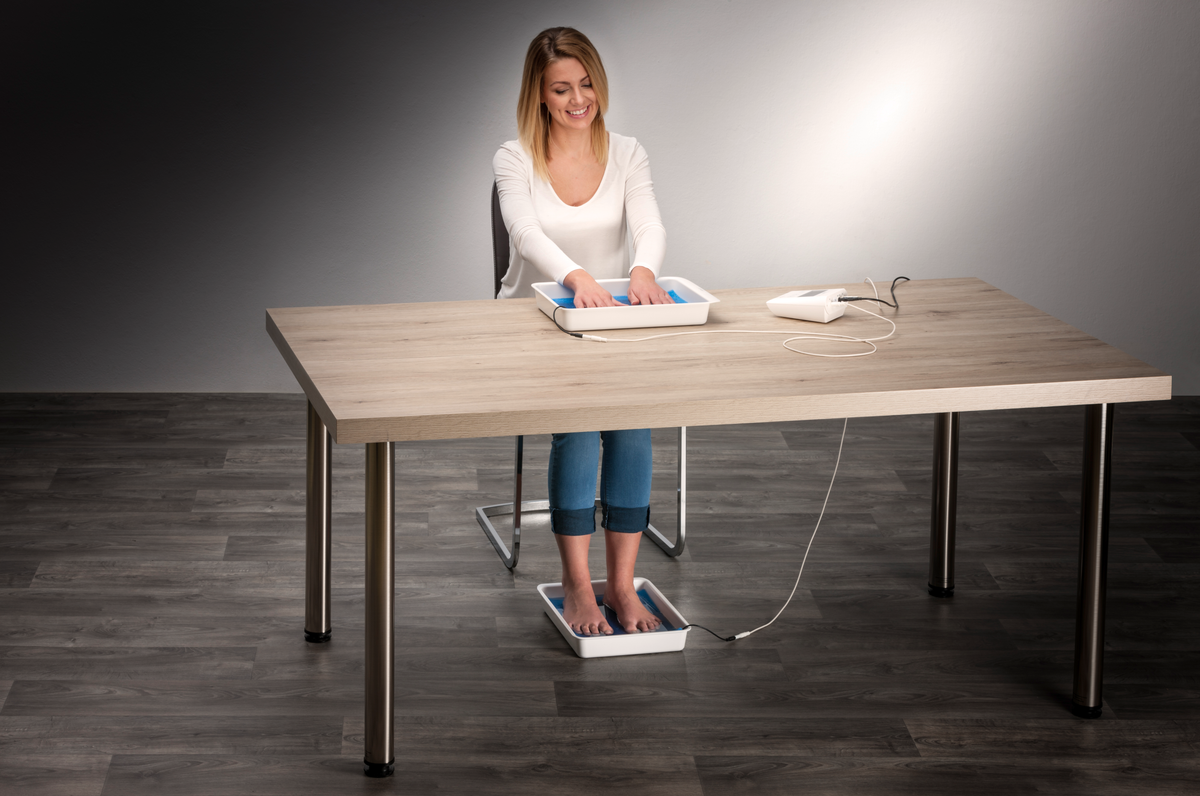
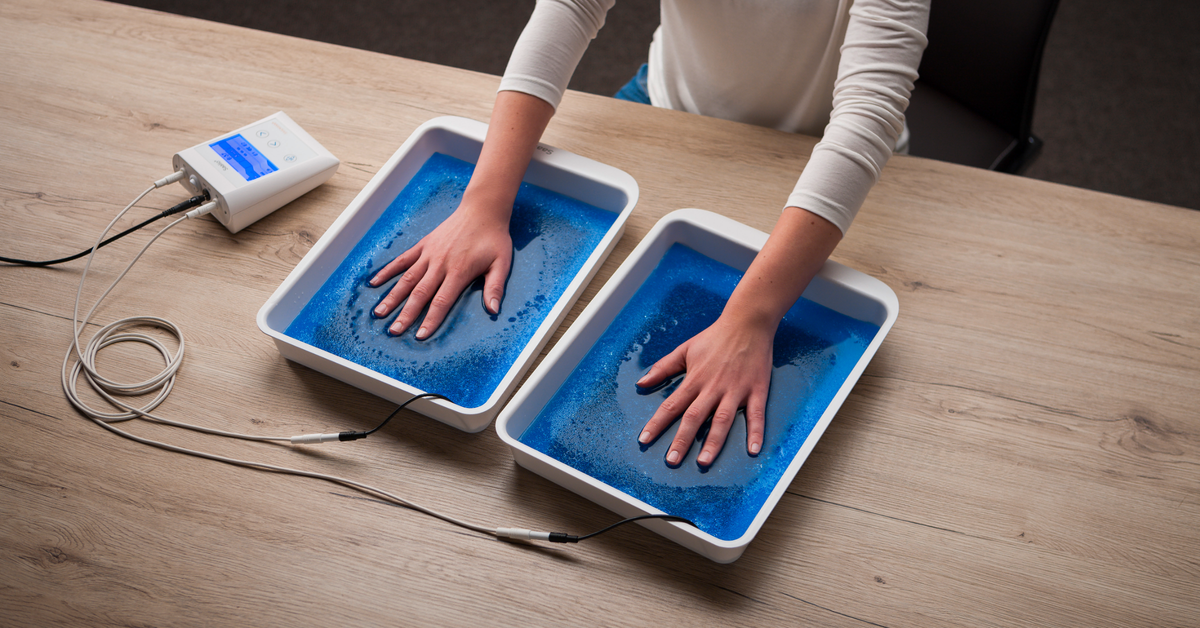
For hands and feet, two trays are filled with tap water. Electrodes are placed beneath foam mats in each tray. You then place your hands or feet in the water, and the iontophoresis device delivers a controlled current between the two electrodes. The current is gradually increased to a level where you feel a mild tingling, and never to the point of pain. For underarms, the process uses sponge pads soaked in water, placed into the armpits. The same principles apply: a mild current, adjusted to your comfort level.
Treatment Phases and Session Times
Treatment is structured in phases, each with a specific purpose and frequency.
Initial Phase: Building the Effect (roughly 4 to 6 weeks)
The initial phase of iontophoresis is the intensive stretch that builds your results. Have a session at least every second day, with a rest day in between so your skin can recover; daily sessions are also fine if your skin tolerates them well. Each session should last at least 15 minutes. Direct current is recommended first as it tends to be more effective, though pulsed current is available for those with sensitive skin. Change the current direction regularly, either manually between sessions or using the AUTO setting on the Saalio, so both sides of the area are treated evenly. If you are treating hands and feet, treat them separately during this phase. A first reduction in sweating is usually noticeable after 10 to 14 days, and it can take a further 3 to 4 weeks of the same routine to reach the level you are after.
Maintenance Phase: Long-Term Control
Once sweating has reduced to a level you're happy with, most people need only one session of iontophoresis per week at 15 to 20 minutes to maintain results, and some find they can go longer between sessions as their response builds over time. This phase continues for as long as you want to keep the effect going.
Current Settings: Starting Low and Building Up
Always begin at a low current of 1 to 3 mA and increase gradually during each session until you feel a mild tingling. The current should never feel painful. Tolerance often increases over time. Feet are typically the least sensitive area; underarms tend to be more sensitive. The Saalio iontophoresis device allows precise adjustment in milliampere units so you stay in full control.
Side Effects and Suitability
Tap water iontophoresis has been used for decades and is considered to have few side effects when used as directed. The Saalio® is a Class IIa medical device (ARTG 496206), supplied in Australia and New Zealand by SudorCure. Like any medical treatment, iontophoresis is not suitable for everyone. There are contraindications including pregnancy, pacemakers, and certain metal implants, which are detailed fully in the device's instructions for use. Minor side effects can include temporary skin redness, tingling during sessions, or dryness after treatment. Applying a moisturiser after each session helps manage any dryness.
If you have any health conditions you're unsure about, it's worth checking with a health professional before starting. You are also welcome to reach out to us at hello@sudorcure.com and we can help point you in the right direction.