Is Aluminium in Antiperspirants Safe? What the Evidence Actually Shows
If you have looked up antiperspirant ingredients, you have probably come across claims linking aluminium to breast cancer or Alzheimer's disease. These concerns are understandable and have circulated for years. Here is what the scientific evidence actually shows.
Where the Concern Came From
Much of the worry traces back to viral emails and social posts from the early 2000s rather than to clinical findings, and to a reasonable but mistaken assumption that anything applied near sensitive tissue must be absorbed in meaningful amounts. Questioning ingredients is a good instinct; the difficulty is that these specific claims have not held up when tested. The fact that antiperspirant use is common in populations that also develop common conditions is correlation, not cause.
The Claim About Breast Cancer
The idea that aluminium compounds in antiperspirants might contribute to breast cancer largely stems from early speculation about aluminium being absorbed through the skin near breast tissue. Large-scale studies have not found evidence to support it. Major health organisations, including Cancer Council Australia, the American Cancer Society, and the US National Cancer Institute, have each reviewed the available evidence and concluded there is no established causal relationship between antiperspirant use and breast cancer. Case-control and cohort studies comparing users with non-users have not shown the pattern you would expect if a real link existed.
The Claim About Alzheimer's Disease
A possible link between aluminium and Alzheimer's disease has been discussed in the scientific literature since the 1960s. More recent and better-designed research has not found a meaningful connection between aluminium exposure from antiperspirants and the development of Alzheimer's. The amount absorbed through skin from topical use is very small, and the body processes and eliminates it efficiently. Dementia Australia notes that while aluminium has been studied in this context, current evidence does not support it as a cause of the disease.
How Much Aluminium Is Actually Absorbed?
A key factor in understanding antiperspirant safety is how much aluminium actually crosses intact skin. Studies measuring absorption from topical antiperspirant use have consistently found that the amount reaching the bloodstream is very small. The skin acts as an effective barrier, and what does pass through is processed and eliminated by the kidneys under normal circumstances. For context, everyday aluminium exposure from food and drinking water is far higher than from antiperspirant use. Aluminium occurs naturally in many foods, including grains, vegetables, and tea, and the body has effective mechanisms for excreting low levels of it. The main exception worth knowing is that broken or freshly shaved skin can absorb a little more, which is one more reason to apply to intact, dry skin, and anyone with significantly reduced kidney function should follow their doctor's advice on aluminium-containing products.
What Aluminium Chlorohydrate Does
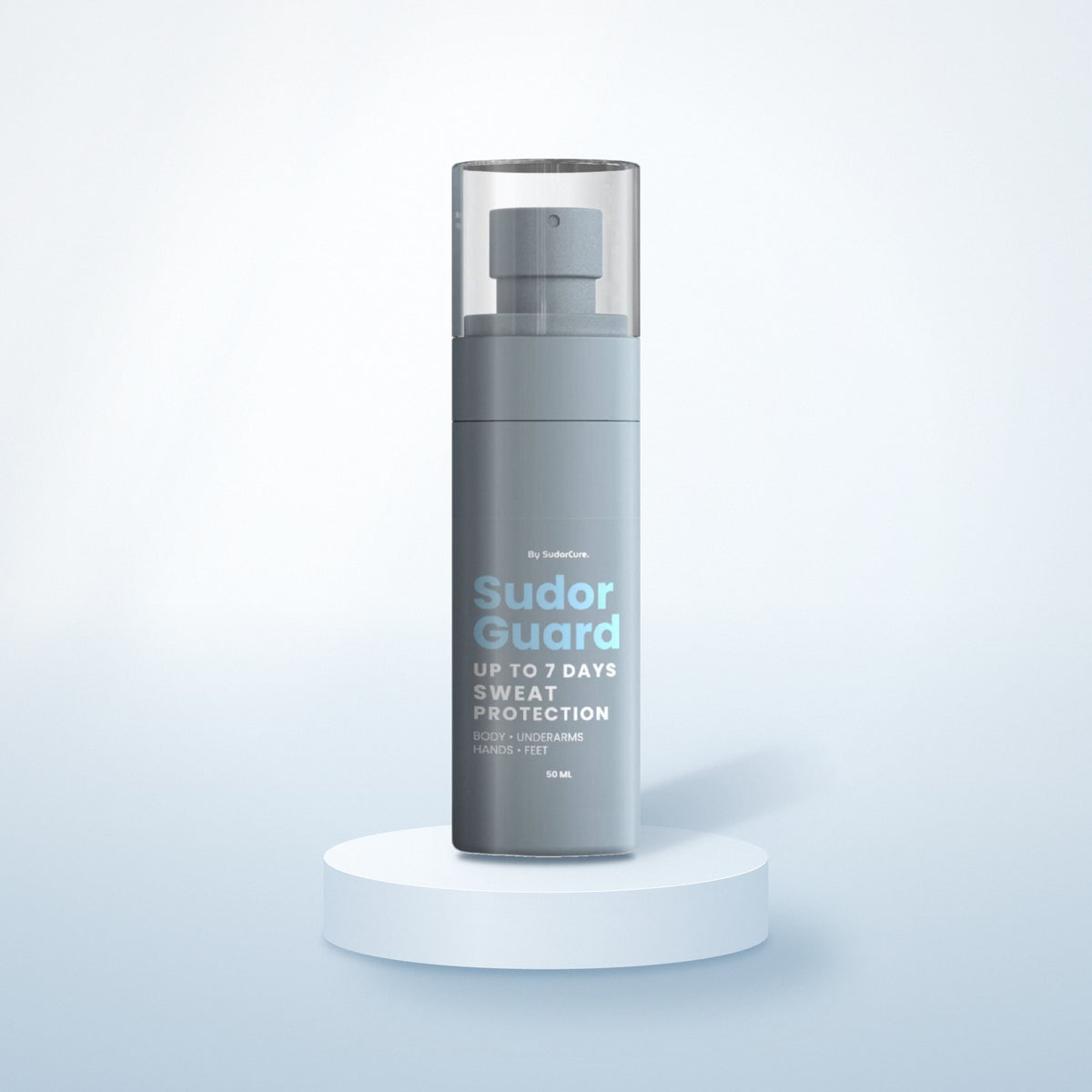
The aluminium compound in SudorGuard, aluminium chlorohydrate, works by temporarily blocking the upper portion of the sweat duct. It does not alter the sweat gland itself, and the effect is entirely reversible. This mechanism has been in clinical use for decades and has a well-established safety profile in the dermatological literature.
What About Skin Sensitivity?
For most people, clinical-strength antiperspirants are well tolerated. The most common cause of irritation is applying to recently shaved skin, or to skin that is not fully dry. Applying to completely dry skin, ideally at night and at least 24 hours after shaving, removes this issue for most people, and starting with every-other-night applications rather than daily can help during the first week if your skin is sensitive. If irritation persists, reducing the frequency or trying a different formulation is a sensible first step, and your GP or a dermatologist can help if it continues.
A Balanced, Evidence-Based View
Being thoughtful about what you put on your body is sensible. Based on current evidence, aluminium-based antiperspirants are considered safe for regular use, and SudorGuard is formulated with aluminium chlorohydrate, an ingredient widely used in clinical-strength products with a long safety record. For people with hyperhidrosis, a clinical-strength antiperspirant is often a practical and necessary tool, and avoiding one on the basis of unverified online claims can mean giving up one of the most accessible options for a condition that genuinely affects daily life.
When to Speak to a Professional
If you have specific health concerns about any ingredient, your GP or pharmacist is the right person to consult in the context of your personal health history. For more on where a clinical-strength spray fits alongside other options, see how to reduce underarm sweating, and you are always welcome to email us at hello@sudorcure.com with questions about SudorGuard or how it fits into a wider treatment approach.
References
- Cancer Council Australia. (2023). Antiperspirants and cancer. cancer.org.au
- American Cancer Society. (2022). Antiperspirants and breast cancer risk. cancer.org
- National Cancer Institute. (2022). Antiperspirants/deodorants and breast cancer. cancer.gov
- Dementia Australia. (2023). Aluminium and the risk of dementia. dementia.org.au