Antiperspirant for Hands and Feet: Does It Work and How Do You Use It?
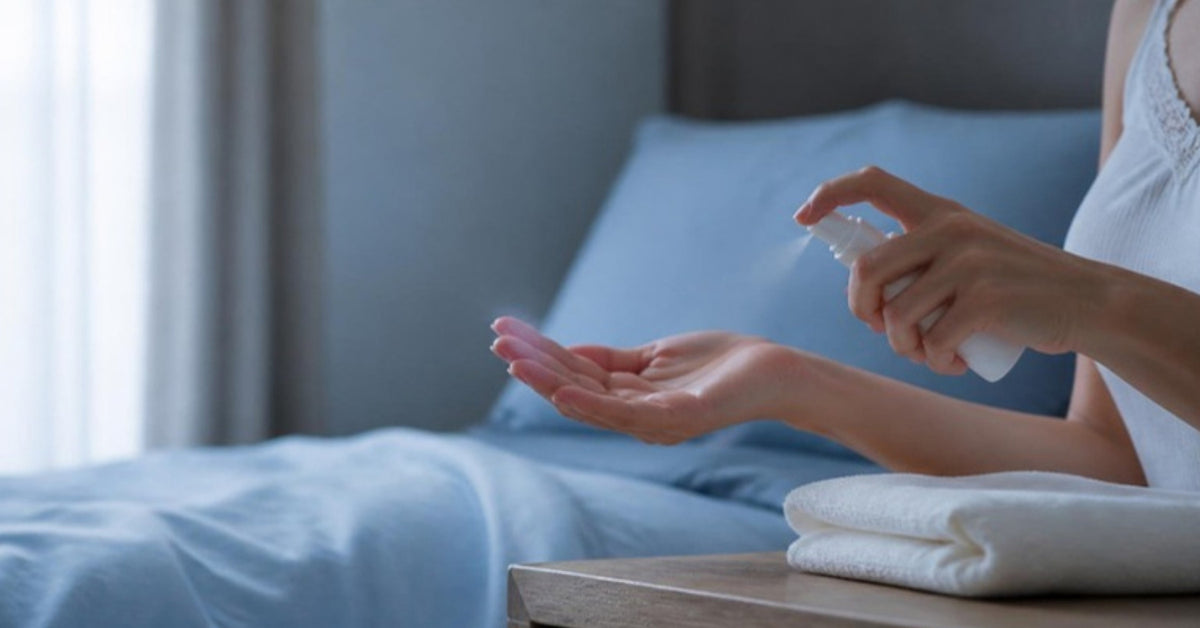
Most people only think about antiperspirant for their underarms. But if your palms leave marks on paper, or your socks are damp before lunch, an antiperspirant for hands and feet is worth a proper try. It works the same way on palms and soles as it does under the arms. The catch is that hands and feet usually need a stronger product and a little more patience.
This guide covers whether an antiperspirant for hands and feet really works, how to apply it, what to expect in the first fortnight, and what to do if a spray isn't enough.
Does an Antiperspirant for Hands and Feet Actually Work?
Yes, for many people it helps. The American Academy of Dermatology lists the hands and feet among the areas where antiperspirant can be part of treatment. An aluminium salt reacts with sweat in the duct and forms a temporary gel plug just below the surface of the skin, so less sweat reaches your palms or soles. The plug is shed naturally as skin renews, which is why you reapply.
Along with the underarms, the palms and soles have more sweat glands than anywhere else on the body, according to DermNet. That is why an everyday antiperspirant for hands rarely keeps up. A review in Dermatologic Clinics found the palms generally respond less readily than the underarms and need higher concentrations, so a clinical-strength formula is the sensible place to start. Our guide to choosing a deodorant for excessive sweating explains what to look for on the label.
How Do You Use a Foot Antiperspirant?
Timing matters more than anything else. Apply a foot antiperspirant at night, right before bed, when your sweat glands are quieter and the active ingredient has time to settle into the ducts. Your feet need to be clean and completely dry, so towel off well after a shower and give them a few extra minutes in the air.
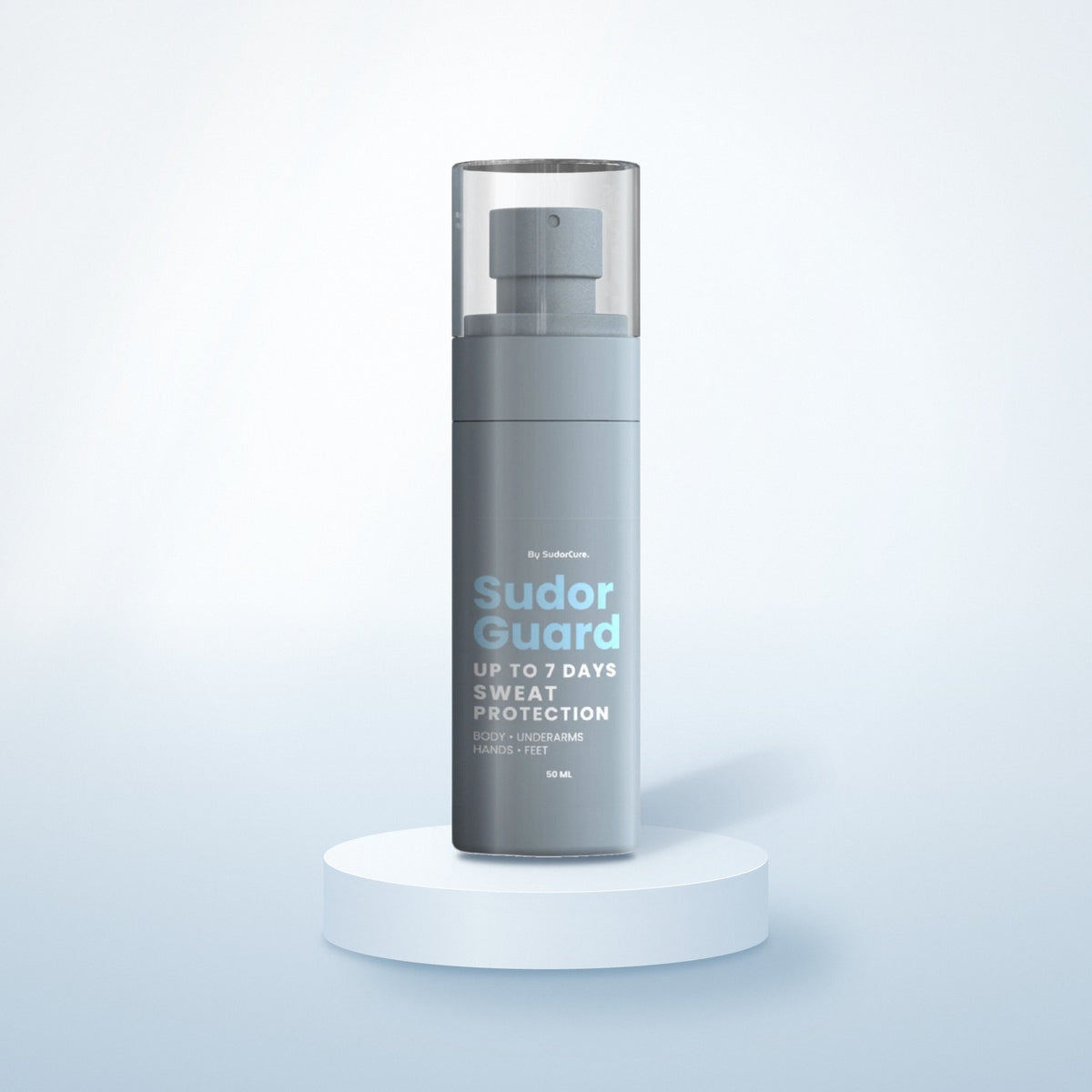
With SudorGuard clinical-strength antiperspirant spray, that means 3 to 4 sprays across each sole and the sides of the foot. Let it dry fully before you pull on socks or get into bed, then rinse it off with water in the morning. Sprays suit feet well. The International Hyperhidrosis Society notes that spray antiperspirants are particularly useful for the feet.
How Do You Use an Antiperspirant for Sweaty Hands?
The routine for an antiperspirant for sweaty hands is the same, with one extra step: apply it after your last hand wash of the evening. Washing your hands is the quickest way to remove the product before it has done its work. Spray your palms, let them dry completely, then leave them alone overnight.
Rinse your hands well in the morning, before you touch your face or eyes. SudorGuard is for the underarms, hands, feet and other small areas, but not the face, scalp or groin. For more on palms specifically, our guide to sweaty hands covers why they happen and what helps.
How Long Does a Hand Antiperspirant Take to Work?
Not overnight. Any hand antiperspirant builds its effect over repeated nights. Apply it every night for the first week, or until you reach the dryness you want, then ease back. Most people need it only one or two nights a week after that. Using it more often during maintenance usually adds irritation, not results.
Many people notice a change within 7 to 14 nights. Hands and feet can take a little longer than underarms, so give it a fair two weeks of correct use before deciding. Once it is working, each application of SudorGuard can help keep you drier for up to 5 to 7 days.
What If It Stings or the Skin Feels Dry?
A mild tingle in the first week is common with any clinical-strength antiperspirant for hands or feet, and it usually settles as your skin adjusts. Make sure your hands or feet are bone dry before you spray.
If your skin feels sensitive, skip a night and carry on, or space out your applications. Never apply to broken, cracked or irritated skin. If you have cracked heels or a suspected infection such as tinea, let it settle first and check with a pharmacist or GP.
What Else Helps Day to Day?
Small habits make an antiperspirant for feet go further. Healthdirect suggests changing your socks at least 2 times a day, airing your feet when you can, and choosing natural fibres such as cotton that let your skin breathe. Rotating your shoes so each pair dries fully between wears also helps with sweat and odour.
For hands, Healthdirect suggests gloves for tasks where grip matters. These measures won't reduce the sweat itself, but they take the edge off while the antiperspirant builds.
When Is Antiperspirant for Hands and Feet Not Enough?
For some people, even a well-used antiperspirant for feet only takes the edge off. That is not a failure on your part. Around 4.8% of people live with hyperhidrosis, which usually begins in childhood or the early teens, and for many the sweating is more than a plug in the duct can hold back. If you have used it correctly for two weeks and still struggle, it is time to look further.
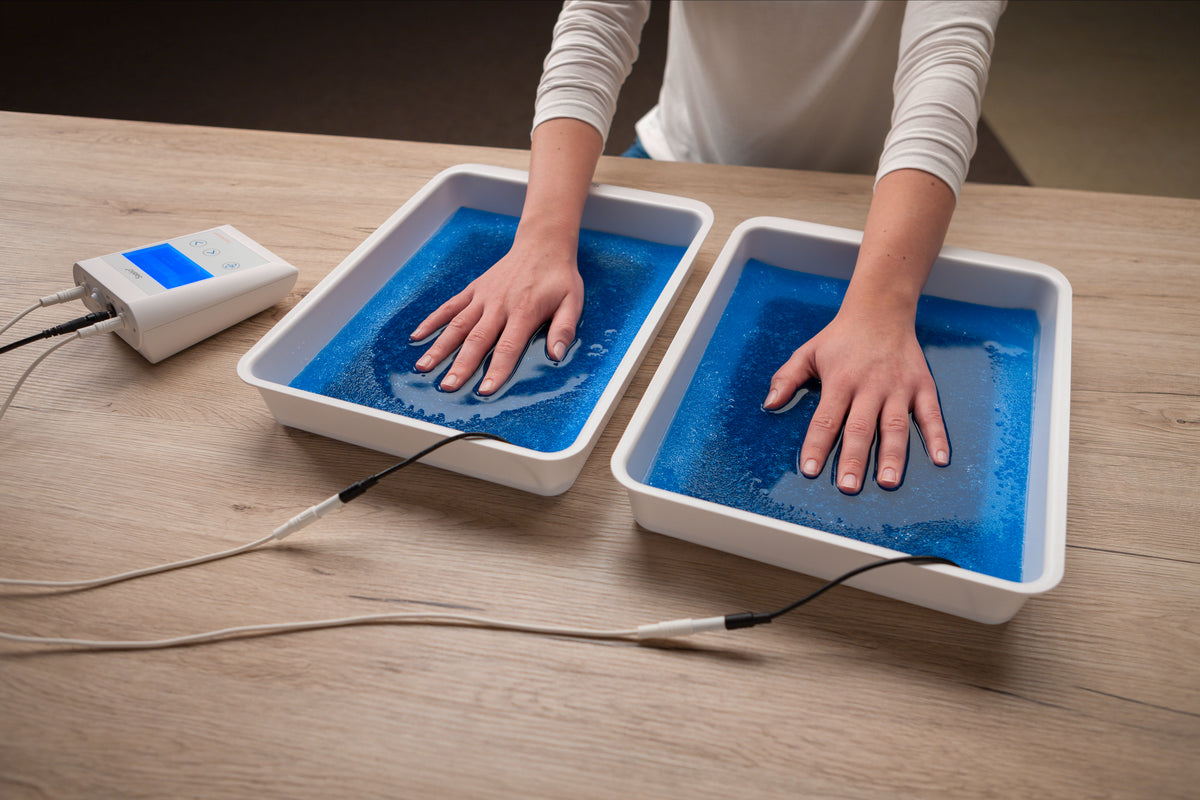
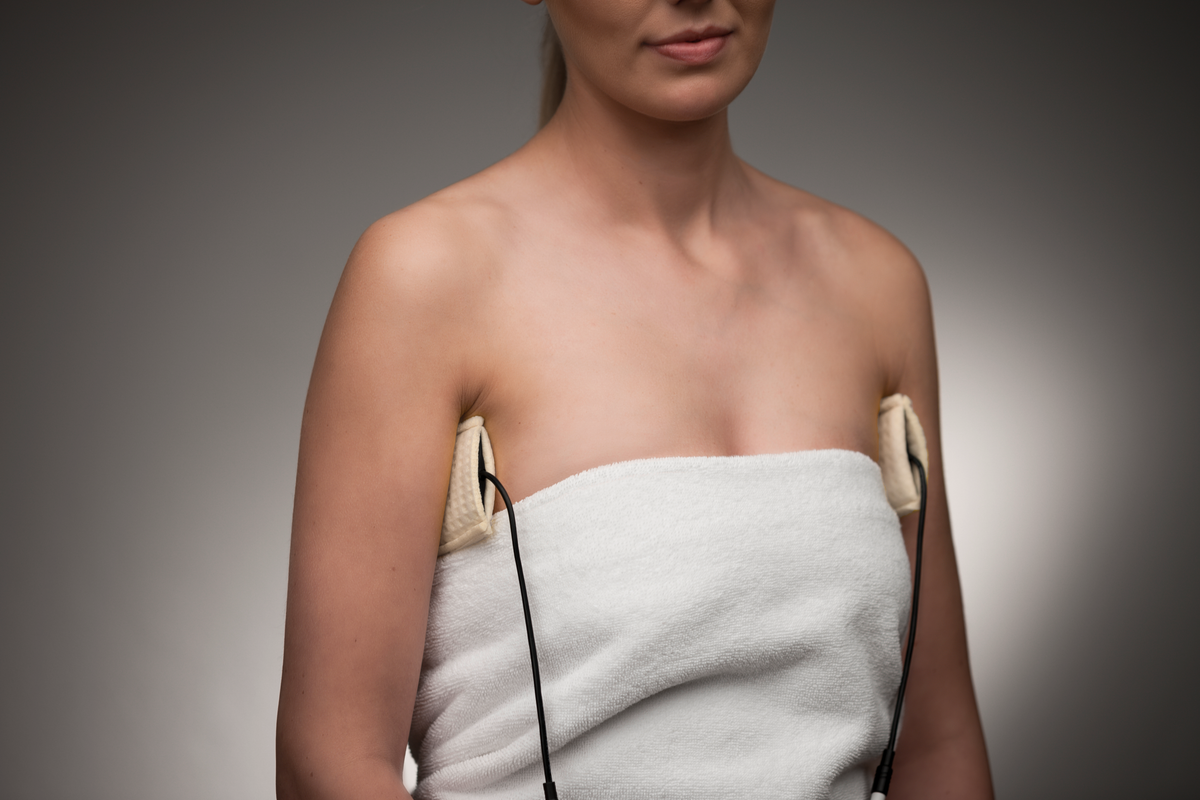
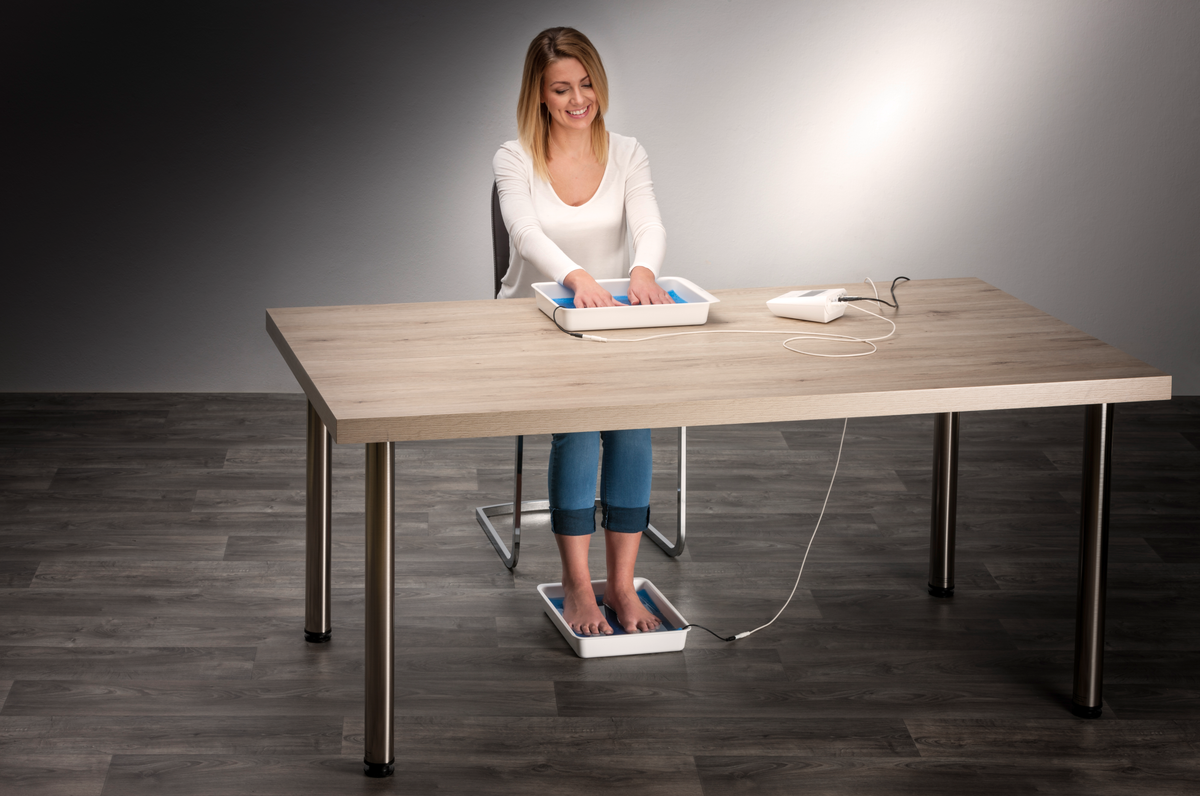
For moderate to severe sweating of the hands and feet, iontophoresis is the next step, and it works in a completely different way. Your hands or feet rest in shallow trays of tap water while a gentle current disrupts the nerve signalling to the sweat glands, with no blockage and nothing injected. Iontophoresis is effective on its own, so you don't need an antiperspirant alongside it.
In the initial phase, you treat at least every second day for at least 15 minutes per area, treating hands and feet separately. A first reduction is usually noticeable after 10 to 14 days, and a further 3 to 4 weeks of the same routine typically brings you to the level you want. After that, maintenance is typically once a week for 15 to 20 minutes, and some people can go weeks between sessions as their response builds over time. Our guide to how iontophoresis works explains the full routine.
It is also worth trying before Botox or ETS surgery, which bring repeat costs, needles or the risks of an operation. The Saalio® Hands & Feet Iontophoresis Device (DE Set) is a Class IIa medical device included in the ARTG, made for exactly this, at home.
You don't have to buy one to find out how you respond. The Try Before You Buy hire program sends a Saalio® DE Set to your home for three weeks ($250 AUD) or four weeks ($300 AUD), with no bond and no card on file. If you buy within 30 days of your hire ending, your full hire fee comes off the price.
If you're not sure where to start, email us at hello@sudorcure.com. We're more than happy to help.
References
- American Academy of Dermatology Association. Hyperhidrosis: diagnosis and treatment. https://www.aad.org/public/diseases/a-z/hyperhidrosis-treatment
- Bandla M. Antiperspirants: types, use, and cautions. DermNet. Updated August 2022. https://dermnetnz.org/topics/antiperspirant
- Pariser DM, Ballard A. Topical therapies in hyperhidrosis care. Dermatologic Clinics. 2014;32(3):485–490. https://www.sweathelp.org/pdf/2014%20-%20Pariser%20&%20Ballard%20-%20Topical%20Therapies%20in%20HH%20Care.pdf
- International Hyperhidrosis Society. Antiperspirants: not just for underarms. https://www.sweathelp.org/hyperhidrosis-treatments/antiperspirants/not-just-for-underarms
- Healthdirect Australia. Excessive sweating. Reviewed March 2026. https://www.healthdirect.gov.au/excessive-sweating
- Doolittle J, Walker P, Mills T, Thurston J. Hyperhidrosis: an update on prevalence and severity in the United States. Archives of Dermatological Research. 2016;308(10):743–749. https://doi.org/10.1007/s00403-016-1697-9