Sweaty Hands: Why It Happens and What Actually Helps
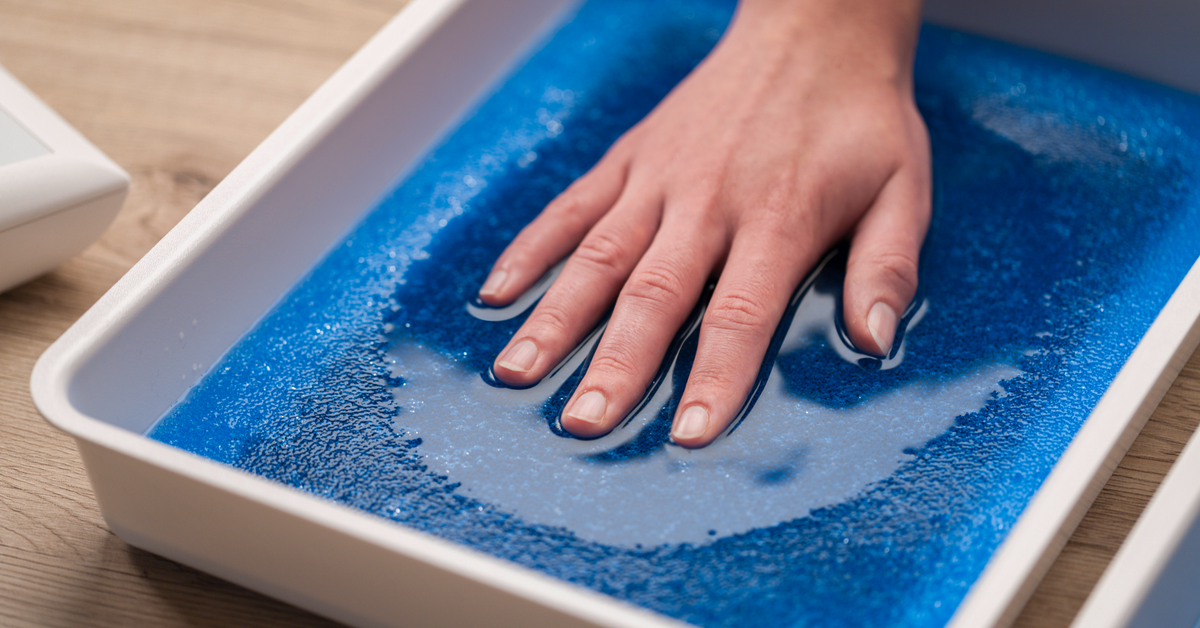
Sweaty hands are one of the most socially disruptive forms of hyperhidrosis. Handshakes, typing, writing, holding a phone, everyday actions that most people never think about can become a source of real anxiety when your palms are constantly damp. If this sounds familiar, you have palmar hyperhidrosis, and you are far from alone. Research suggests sweaty hands affect between 1 and 3% of the population.
What Causes Sweaty Hands?
Palmar hyperhidrosis is caused by overactive eccrine sweat glands in the palms. In most cases it is classified as primary hyperhidrosis, meaning there is no underlying medical condition driving it. The nervous system sends exaggerated signals to the sweat glands, causing them to produce far more sweat than the body needs. Sweaty hands can be triggered by stress, anxiety, warmth, and minor exertion, but the condition also occurs in the complete absence of any obvious trigger. There is a strong genetic component: roughly half of people with palmar hyperhidrosis have a family history of the condition.
How Do Sweaty Hands Affect Daily Life?
The impact of sweaty palms extends well beyond physical discomfort. People with palmar hyperhidrosis often avoid social situations, decline handshakes, struggle with paper-based work, and find that touchscreens and keyboards become a constant frustration. For students, handwriting in exams can be significantly affected. The condition can affect confidence, professional interactions, and overall wellbeing in ways that are difficult to quantify but very real for those living with it.
What Treatment Options Are Available for Sweaty Hands?
Iontophoresis
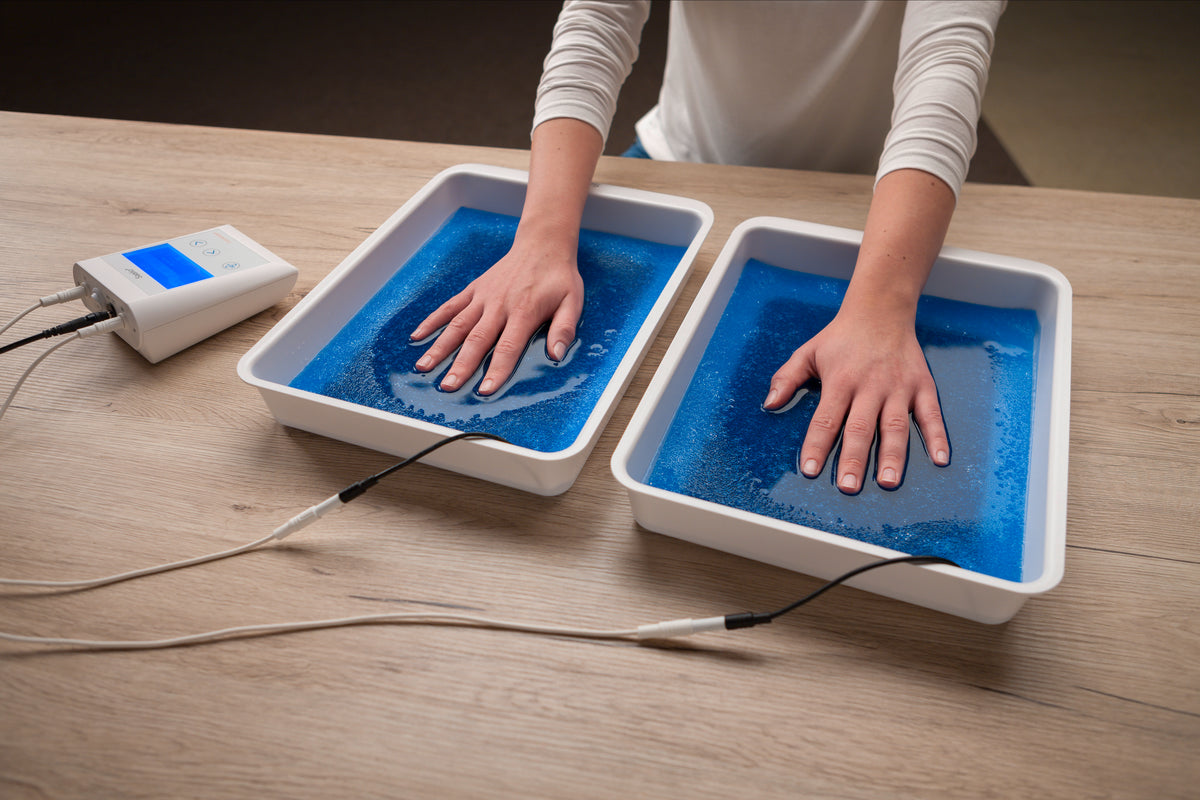
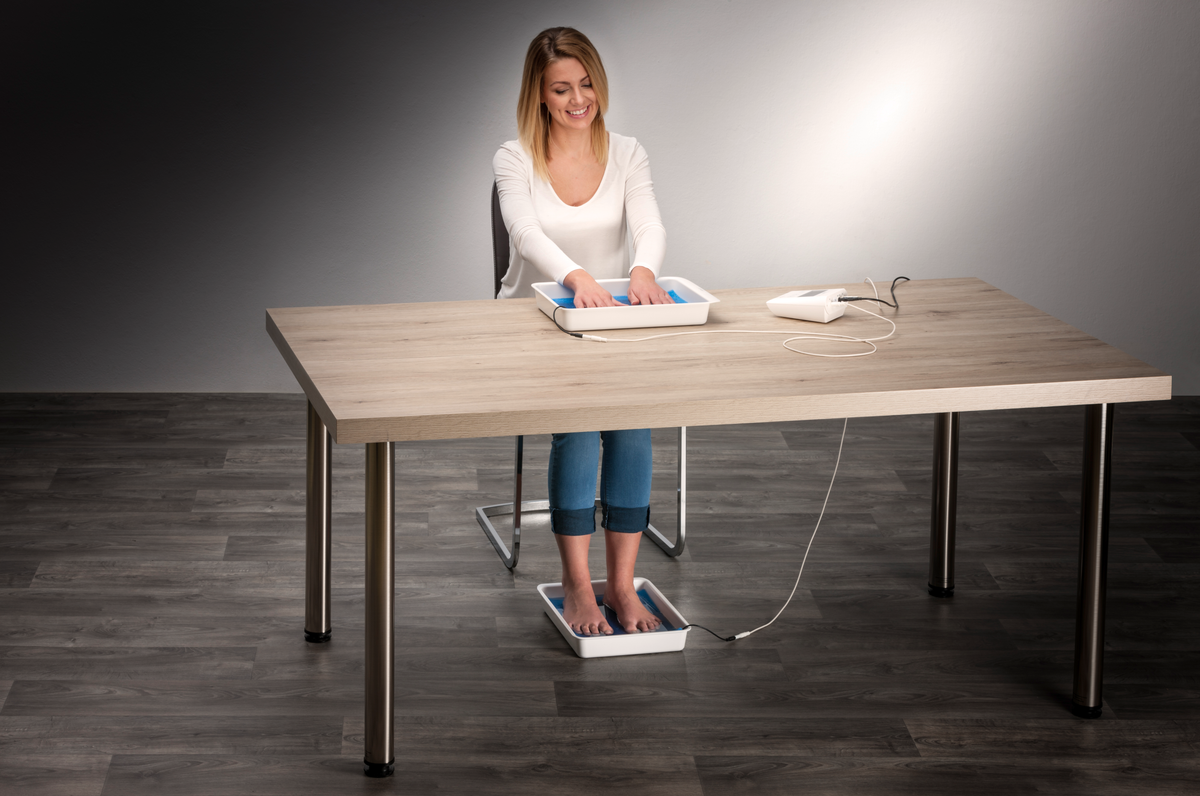
Iontophoresis is widely considered the most effective non-invasive treatment for sweaty hands. The hands are placed in two shallow trays of tap water and a mild electrical current is passed through the water. Over the initial treatment phase, this process temporarily reduces sweat secretion from the palmar sweat glands. Clinical studies report improvement in up to 93% of palmar hyperhidrosis patients treated with tap water iontophoresis.
The initial phase involves sessions of at least 15 minutes at least every second day, or daily if the skin tolerates it, sustained for 4 to 6 weeks depending on individual response. Once results are achieved, maintenance is typically once weekly at 15 to 20 minutes to keep sweaty hands under control. Many people find they can extend sessions further apart over time, with some managing on as little as one session every two to three weeks.
The Saalio® Hands & Feet Iontophoresis Device (DE Set) is the device used for palmar iontophoresis, available to hire or purchase through SudorCure.
Clinical-Strength Antiperspirants
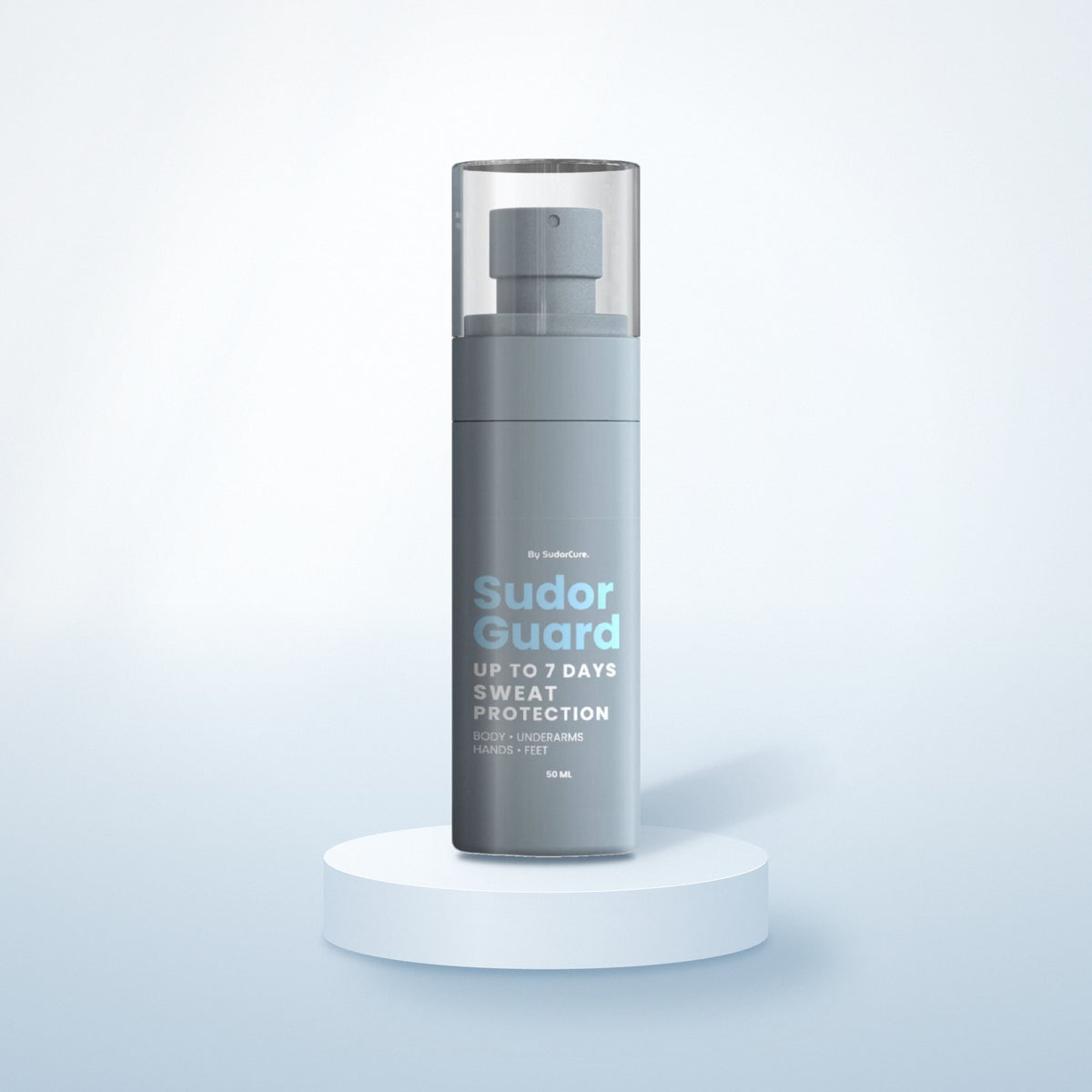
Aluminium-based antiperspirants such as SudorGuard can provide some relief for mild sweaty hands, applied to clean, dry palms before bed. They are a low-barrier first step, but success rates for palmar hyperhidrosis are around 10 to 20%, they tend to be more effective for underarm hyperhidrosis and are unlikely to provide sufficient control for moderate or severe sweaty hands.
Botox Injections
Botulinum toxin injections into the palms can be effective, though the procedure can be uncomfortable due to the density of nerve endings in the hands, often requiring a nerve block. Results last 3 to 6 months and re-treatment is required. Unlike underarm Botox, there is no Medicare item and no PBS subsidy for sweaty hands, the full cost falls on the patient, making it an expensive ongoing commitment. Iontophoresis is generally recommended before considering Botox.
Tips for Managing Sweaty Hands Day to Day
While starting treatment, a few practical measures help reduce the day-to-day impact of sweaty hands: keeping hands cool when possible, using moisture-wicking materials, and managing stress where feasible.
Should I See a Doctor?
Speaking with your GP or a dermatologist is a good idea, both to confirm you are dealing with primary hyperhidrosis and to make sure there is no underlying cause worth investigating. Sweaty hands are well understood by most dermatologists and a straightforward consultation is usually all that is needed to confirm the diagnosis and map out a treatment plan. You can also reach out to us at hello@sudorcure.com and we are happy to help guide you through your options.
What Results Can You Expect From Iontophoresis?
For palmar hyperhidrosis specifically, iontophoresis tends to produce the most reliable results of any non-surgical sweaty hands treatment. Most people notice a meaningful change within the first two to four weeks of the initial phase. The tray-based setup of the Saalio® Hands & Feet Iontophoresis Device (DE Set) makes sessions practical and easy to build into an evening routine.
Once results are achieved, maintenance requires only one session per week of 15 to 20 minutes. For most people, this becomes a simple routine: a short session in the evening, about once a week, for reliably dry palms across all situations. And unlike Botox, which requires repeat clinic visits with no government subsidy for sweaty hands, iontophoresis is a one-time device investment that continues to work as long as you maintain the routine.
Ready to try iontophoresis for sweaty hands? Hire the Saalio® DE Set before you commit to purchasing.