ETS Surgery for Hyperhidrosis: What It Involves, What It Costs and What to Try First

If you have sweaty hands and feel you have tried everything, you will have come across ETS surgery sooner or later. It is the one hyperhidrosis treatment that promises dry hands for good, in a single operation, and for a small number of people it delivers exactly that. It is also the treatment with the highest stakes on the list, and the one you cannot undo.
This guide explains what ETS surgery actually involves, who surgeons think it is for, what the long-term studies show, what it costs in Australia, and why the surgeons' own guidelines ask you to try iontophoresis before they will operate. None of this is meant to frighten you. It is meant to help you weigh a big decision with the same facts a specialist would.
What Is ETS Surgery?
ETS stands for endoscopic thoracic sympathectomy. The sweat glands in your hands and underarms are switched on by a chain of nerves that runs down each side of your spine inside the chest, and ETS surgery interrupts that chain so the signal never reaches the glands. The glands themselves are left untouched. They simply stop being told to sweat.
ETS surgery is a keyhole operation under general anaesthetic. The surgeon makes one or two small cuts beside the armpit, passes a thin camera into the chest, usually lets the lung on that side partly collapse to make room, and then cuts, burns or clips the nerve chain at a chosen level along the ribs. The same is then done on the other side. Most people go home the same day, and normal activities usually resume within one to two weeks.
The level matters. The Society of Thoracic Surgeons' expert consensus recommends interrupting the chain at the third rib for the driest hands, or the fourth rib for slightly moister hands with a lower risk of the side effect covered below, and the fourth and fifth ribs when underarms are the main problem. Your surgeon will talk you through which level suits your pattern of sweating, because that choice shapes both the result and the risks of ETS surgery.
Who Is Hyperhidrosis Surgery For?
ETS surgery is designed for primary hyperhidrosis of the hands, the kind that starts in childhood or the early teens and runs in families, and sometimes for hands and underarms together. Our guide to how focal hyperhidrosis is diagnosed explains how a doctor confirms that pattern before anything else is considered.
ETS surgery is not a first step. The surgeons' consensus is clear that antiperspirants, iontophoresis and Botox should be tried before surgery, and Healthdirect describes hyperhidrosis surgery as something to consider only when sweating is severe or has not responded to other treatments. The International Hyperhidrosis Society goes further, calling it a last resort after every other option has been tried and adjusted.
It is also mostly for hands. In a Spanish study that followed 91 patients for a median of more than ten years, hand and underarm sweating improved in almost everyone, but foot sweating improved in only 5.49% of patients. If sweaty feet are your main concern, ETS surgery is unlikely to be the answer, and iontophoresis treats hands and feet with the same device.
Does ETS Surgery Work?
For the hands, yes, and the effect of ETS surgery is immediate. In the same Spanish follow-up study, 94.5% of patients had their sweating reduced by more than 80%, and that result held a decade later. A separate 20-year cohort study published in 2025 found the palms of those who could still be traced were still dry two decades on. When ETS surgery works, it lasts.
Satisfaction is high too. In the ten-year study, 93.95% of patients were satisfied and 91.21% said they would recommend the operation. Those are the numbers that draw people to ETS surgery, and they are real. The reason ETS surgery remains a last resort is not that it fails to stop the sweating. It is what tends to happen next.
What Is Compensatory Sweating?
Compensatory sweating is the body's response to having part of its sweat network switched off. After ETS surgery, many people begin sweating more somewhere else, most often the back, chest, abdomen, buttocks and thighs. The hands are dry, but the shirt is wet. It is by far the most common consequence of the operation, and it is the reason most people who research ETS surgery end up looking elsewhere.
How common is it? A 2025 meta-analysis pooling ten studies and 3,117 patients found that 62% developed compensatory sweating, and 23% of those assessed had it severely. The surgeons' consensus puts the reported range anywhere from 3% to 98% depending on the technique and how each study defined it. Whichever end of that range a surgeon quotes you, it is not a rare complication of ETS surgery.
How bad can it be? The International Hyperhidrosis Society cites a Danish study in which half the participants had to change clothes during the day because of compensatory sweating after ETS surgery. In the 20-year cohort, back sweating scores rose from 1 to 4 on the study's scale after the operation and were still there at 20 years. The society describes it as very difficult to treat, even with several therapies combined.
Some people are more at risk than others after ETS surgery. The 2025 meta-analysis found that older patients, people with a higher body mass index and smokers were all significantly more likely to develop compensatory sweating. Your surgeon should ask about all three before recommending ETS surgery, and it is worth raising them yourself if they do not.
What Are the Other Risks of an Operation for Excessive Sweating?
Compensatory sweating gets most of the attention, but ETS surgery, like any operation for excessive sweating, carries the usual risks of chest surgery under general anaesthetic as well. The surgeons' consensus lists a drooping eyelid from nerve damage, called Horner's syndrome, in 0.7% to 3% of patients, a collapsed lung needing a drain in about 1%, and a long-term slowing of the heart rate. Some people also find they sweat on the head and neck after eating.
A few people end up with hands that are too dry after ETS surgery, which sounds like a good problem until skin cracks and grip suffers. And the operation is irreversible. Even when the nerve is clipped rather than cut, the consensus says the procedure should be considered irreversible, and the International Hyperhidrosis Society notes that no successful reversal has ever been reported. If compensatory sweating turns out to be worse than the sweaty hands were, there is no way back.
What Do ETS Surgery Costs Look Like in Australia?
ETS surgery is listed on the Medicare Benefits Schedule under item 35003, upper thoracic sympathectomy, with a schedule fee of $1,098.05 and a 75% benefit of $823.55 when done in hospital. Surgeons and anaesthetists usually charge above the schedule fee, and there are hospital and theatre costs on top, so what you actually pay depends heavily on your private health cover and your surgeon's fees.
The Royal Australian College of General Practitioners' journal has described the out-of-pocket cost of sympathectomy as $5,000 or more, enough to put it out of reach for many patients. Before ETS surgery, you will also need a GP referral and a specialist consultation, each with its own fee. ETS surgery costs are only part of the picture, but they are worth knowing before you book a consultation.
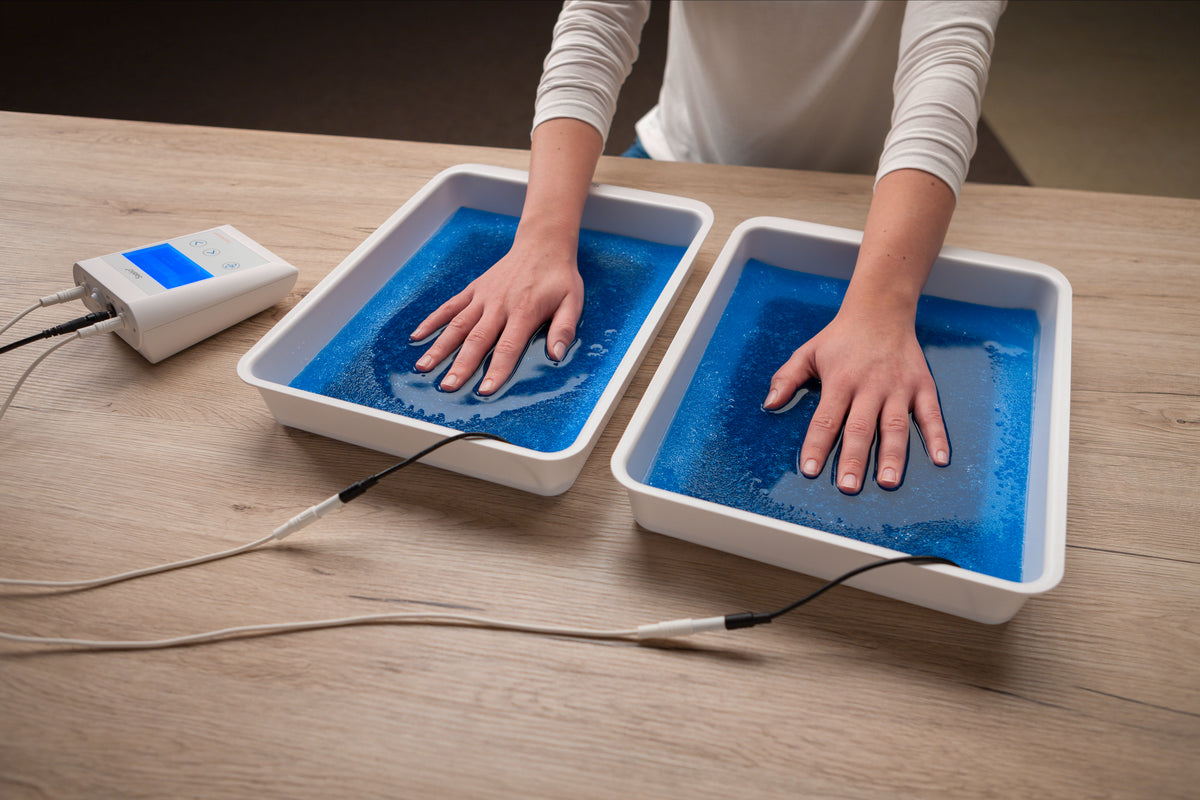
For comparison, a Saalio® Hands & Feet Iontophoresis Device costs $1,345 AUD once, treats both hands and both feet, carries a four-year warranty, and can be trialled at home for three weeks for $250 AUD before you decide.
What Should You Try Before ETS Surgery?
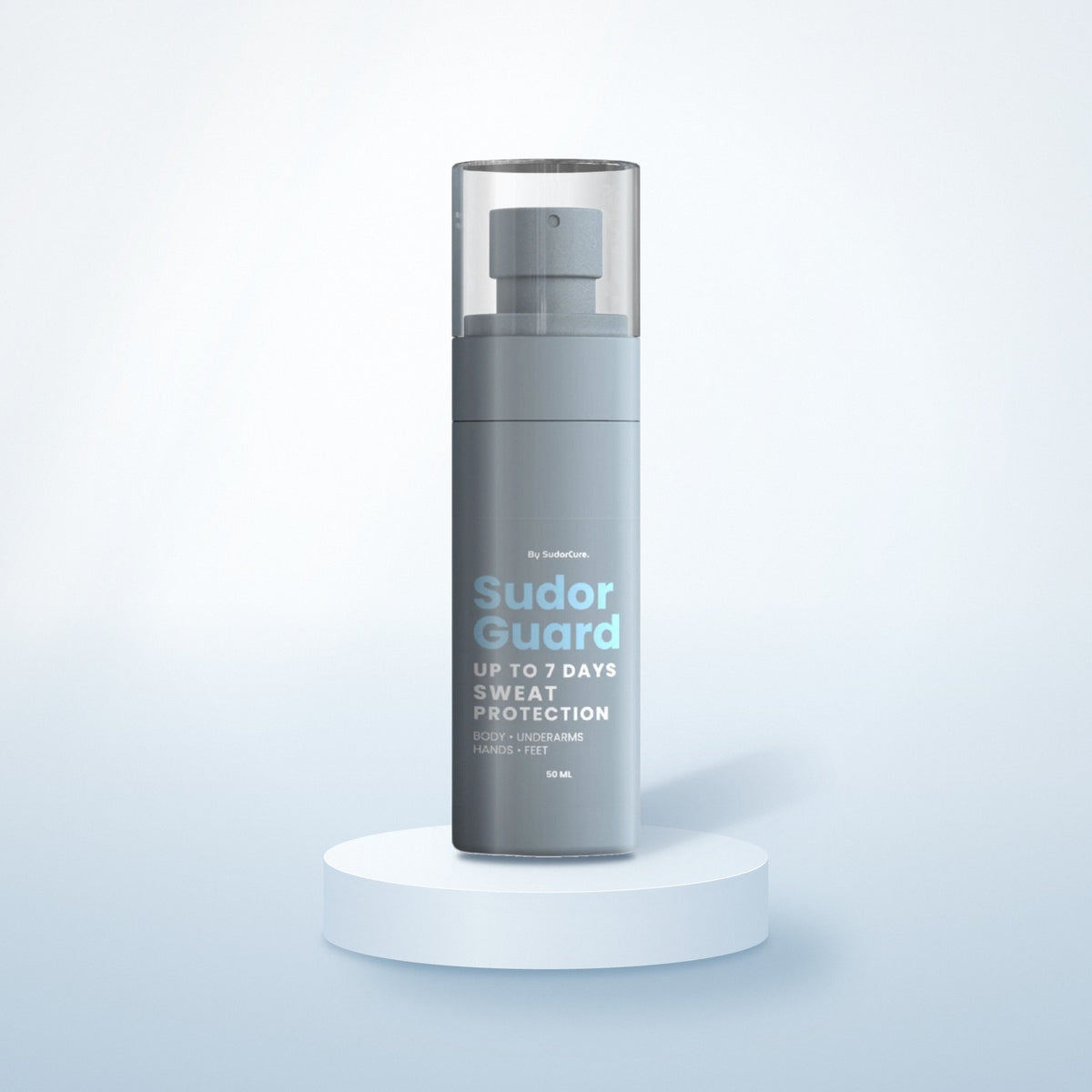
The surgeons' consensus names three things to try before ETS surgery: antiperspirants, iontophoresis and Botox, in that order. For underarms, a clinical-strength antiperspirant such as SudorGuard Antiperspirant Spray is the simplest first step, and iontophoresis is the next step if it is not enough.
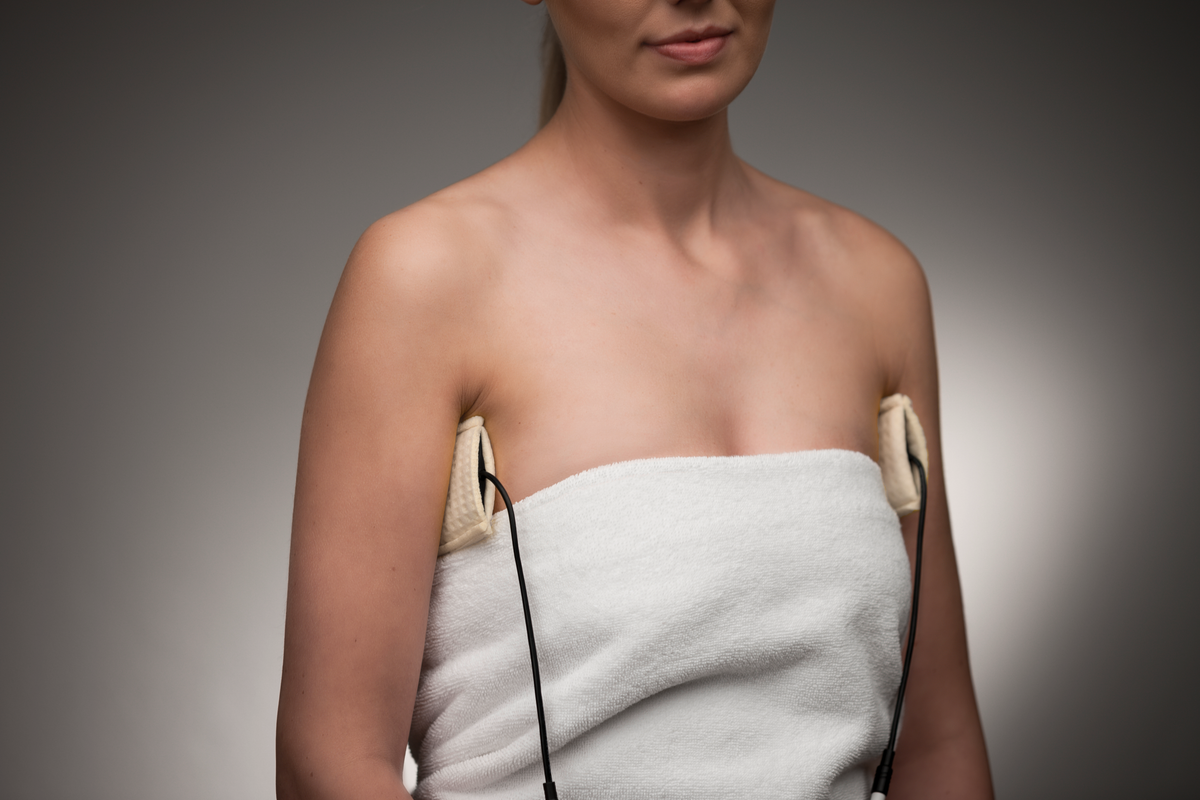
For hands and feet, iontophoresis is where the evidence points. In a British dermatology study of tap water iontophoresis, four weeks of 20-minute sessions three times a week brought hand sweating severity down from 7.6 to 1.9 on a ten-point scale, with only mild skin irritation reported. It works on the signal between nerve and sweat gland rather than cutting the nerve, so the effect is fully reversible and nothing is destroyed. Our post on how sweat blocking works puts the two side by side.
After the initial phase, maintenance is typically one session a week of 15 to 20 minutes, and many people find they can go weeks between sessions as their response builds over time. There is no anaesthetic, no scar, no hospital and no compensatory sweating. If it does not suit you, you simply stop.
Botox is the third rung. In Australia it is Medicare-subsidised for severe underarm sweating only, it lasts around six to nine months per round, and for hands the injections are painful and unsubsidised. Our comparison of iontophoresis vs Botox covers the trade-offs in detail. Only once all three have been given a fair go does ETS surgery come into the conversation, and by then most people have found something that works.
Where to Start Instead of ETS Surgery
If you are weighing up ETS surgery for your hands or feet, try the treatment surgeons ask you to try first. The Try Before You Buy hire program puts a Saalio® device in your home for three or four weeks, and if you decide to buy within 30 days of your hire ending, your hire fee comes off the purchase price. Our guide to sweaty hands explains what to expect in the first few weeks.
If you have already had ETS surgery and are dealing with compensatory sweating on the back or torso, iontophoresis is designed for the hands, feet and underarms rather than the torso, but SudorGuard Antiperspirant Spray can help with underarm sweating, and we are happy to talk it through. Email us at hello@sudorcure.com and we will help you work out where to start.
References
- Cerfolio RJ, De Campos JRM, Bryant AS, et al. The Society of Thoracic Surgeons expert consensus for the surgical treatment of hyperhidrosis. Annals of Thoracic Surgery. 2011;91(5):1642–1648. https://www.sts.org/sites/default/files/documents/ExpertConsensus_Surgical_Treatment_Hyperhidrosis.pdf
- Lin Z, Lin M. Which patients are more likely to experience compensatory hyperhidrosis after endoscopic thoracic sympathectomy: a meta-analysis and systematic review. PeerJ. 2025;13:e19097. https://pmc.ncbi.nlm.nih.gov/articles/PMC11927556/
- Martínez-Hernández NJ, Estors-Guerrero M, Galbis-Caravajal JM, Hervás-Marín D, Roig-Bataller A. Endoscopic thoracic sympathectomy for primary hyperhidrosis: an over a decade-long follow-up on efficacy, impact, and patient satisfaction. Journal of Thoracic Disease. 2024. https://jtd.amegroups.org/article/view/94401/html
- Ramos R, et al. 20-year efficacy of endoscopic thoracic sympathectomy for primary hyperhidrosis: a cohort study. Journal of Clinical Medicine. 2025;14(14):4831. https://www.mdpi.com/2077-0383/14/14/4831
- International Hyperhidrosis Society. ETS surgery. https://www.sweathelp.org/hyperhidrosis-treatments/ets-surgery.html
- Healthdirect Australia. Hyperhidrosis. https://www.healthdirect.gov.au/hyperhidrosis
- Sinclair R, Perera E. Hyperhidrosis and bromhidrosis: assessment and management. Australian Family Physician. 2013;42(5). https://www.racgp.org.au/afp/2013/may/hyperhidrosis-and-bromhidrosis
- McConaghy JR, Fosselman D. Hyperhidrosis: management options. American Family Physician. 2018;97(11):729–734. https://www.aafp.org/afp/2018/0601/p729
- Department of Health, Disability and Ageing. Medicare Benefits Schedule item 35003: cervical or upper thoracic sympathectomy by any surgical approach. https://www9.health.gov.au/mbs/fullDisplay.cfm?type=item&q=35003&qt=item
- Cleveland Clinic. Sympathectomy: procedure details and side effects. https://my.clevelandclinic.org/health/procedures/sympathectomy
- Siah TW, Hampton PJ. The effectiveness of tap water iontophoresis for palmoplantar hyperhidrosis using a Monday, Wednesday, and Friday treatment regime. Dermatology Online Journal. 2013;19(3):14. https://escholarship.org/uc/item/8nq6f8t1