Hyperhidrosis at Work: Excessive Sweating in Professional Life
Work puts you in precisely the situations hyperhidrosis makes hardest: meetings, presentations, introductions, client contact. For many people the professional environment is where the condition is felt most acutely, and where the need to appear composed makes it feel most urgent.
The Professional Impact of Hyperhidrosis
The ways hyperhidrosis affects working life are both visible and invisible. Visible: sweat patches on clothing, damp hands in meetings, sidestepped handshakes. Invisible: the constant low-level monitoring, the mental energy spent planning around the condition, the meetings quietly avoided and the opportunities declined. Research consistently links hyperhidrosis to career progression, with people more likely to report avoiding roles, presentations, and networking, not because of ability but because of the anxiety the condition creates around those moments. The specifics vary by role: shared documents and keyboards, a marker gripped at the whiteboard in front of the room, a uniform or PPE that traps heat, or simply a long meeting in a warm space with no easy exit. None of these reflect competence, yet each can quietly shape which situations you seek out and which you avoid.
Short-Term Strategies That Help Day to Day
While treatment builds, a few practical measures make the workday easier:
- Clothing. Breathable natural fabrics such as merino, bamboo, and linen handle moisture better than synthetics. Looser cuts under the arms reduce visible patches, and darker colours and prints conceal damp marks far better than pale, flat tones.
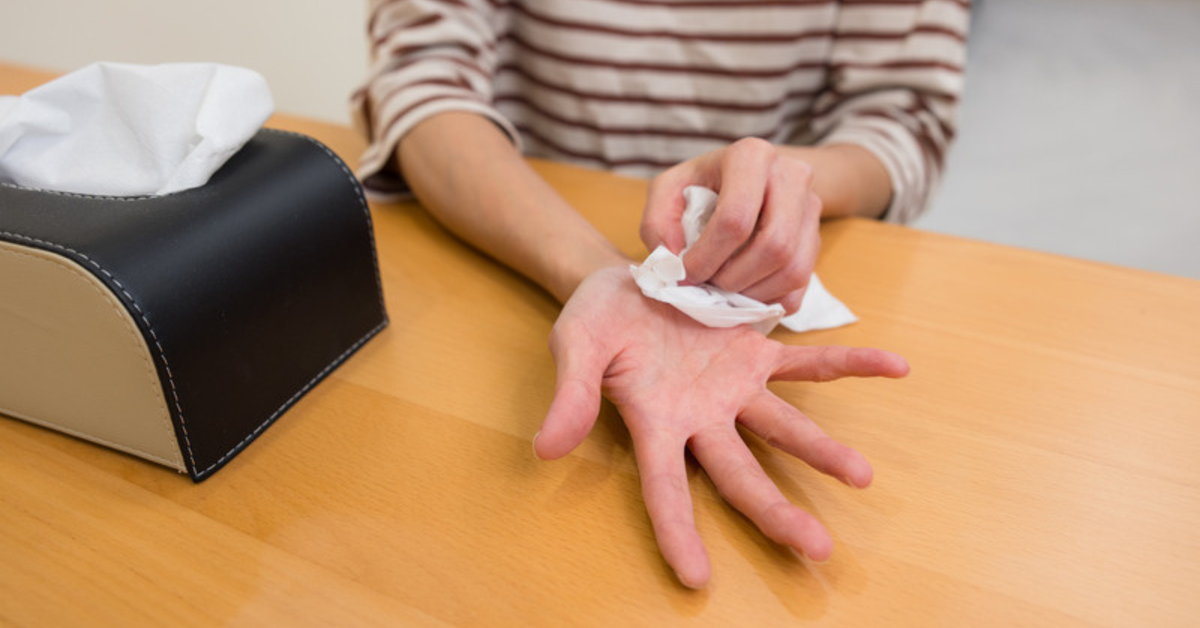
- Handshakes. A small tissue or cloth in a pocket lets you dry your hands discreetly before contact, and pressing the hands firmly against your thighs for a few seconds beforehand can help too.
- Environment. Where you can influence it, a cooler room helps. A seat near a vent, out of direct sun, or where the air circulates reduces the environmental contribution, and for back-to-back video calls a cool, well-ventilated workspace makes a real difference.
- Triggers. Caffeine, spicy food, and nicotine can all lift sweating; easing back on them before a high-stakes meeting can take the edge off on the day.
These measures genuinely help, but they are stopgaps rather than solutions, most useful during the initial phase while iontophoresis builds results.
Why Treatment Is the Real Shift
The biggest change most people describe comes when they start effective treatment. Sweating reduces, the constant monitoring eases, and the mental energy the condition was quietly consuming becomes available for the actual work. People who have lived with hyperhidrosis for years often underestimate that cognitive load until it lifts. Meetings feel less fraught, networking less charged, and situations that were once carefully planned around become unremarkable. The most underrated professional benefit of treatment is not simply drier hands or underarms, it is the return of mental bandwidth.
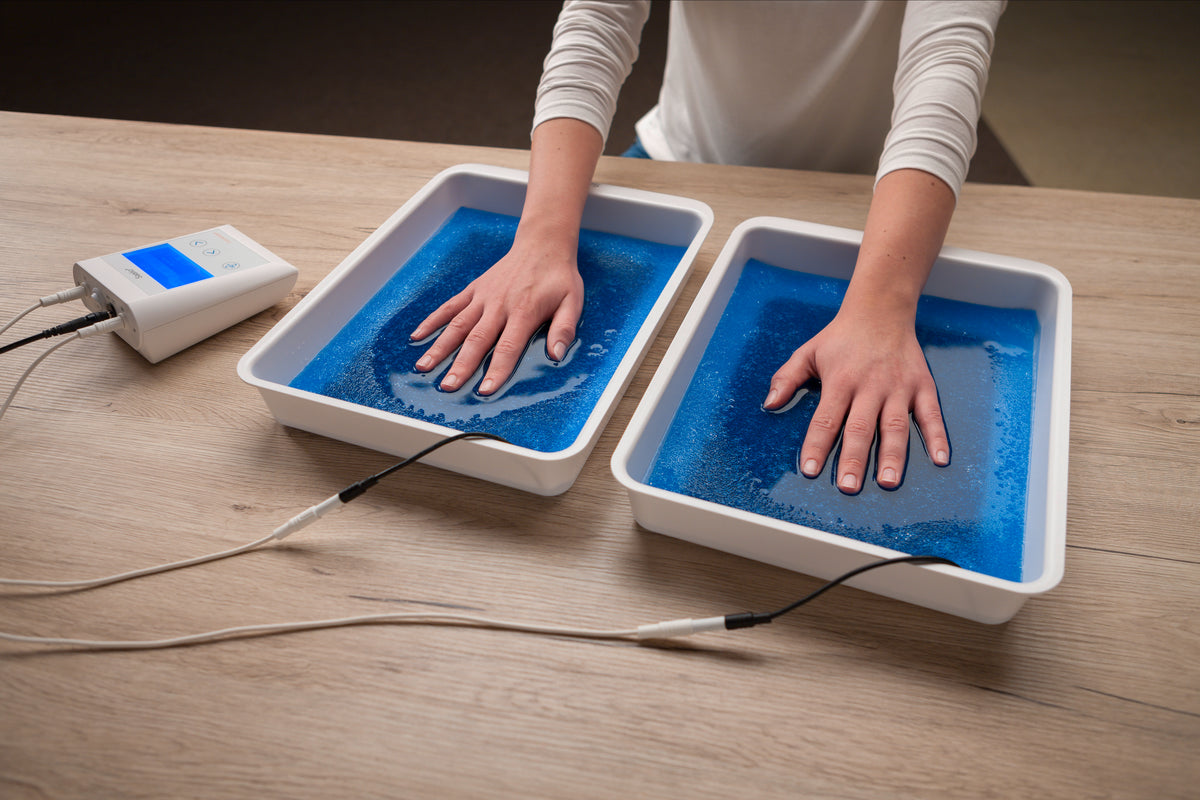
It helps to set expectations for that first stretch. Iontophoresis is typically done in sessions of around 15 to 20 minutes, several times a week to begin with, and the drop in sweating builds over the first few weeks rather than arriving overnight. Once your response is established, many people extend the gap between sessions considerably.
What Works for Which Area
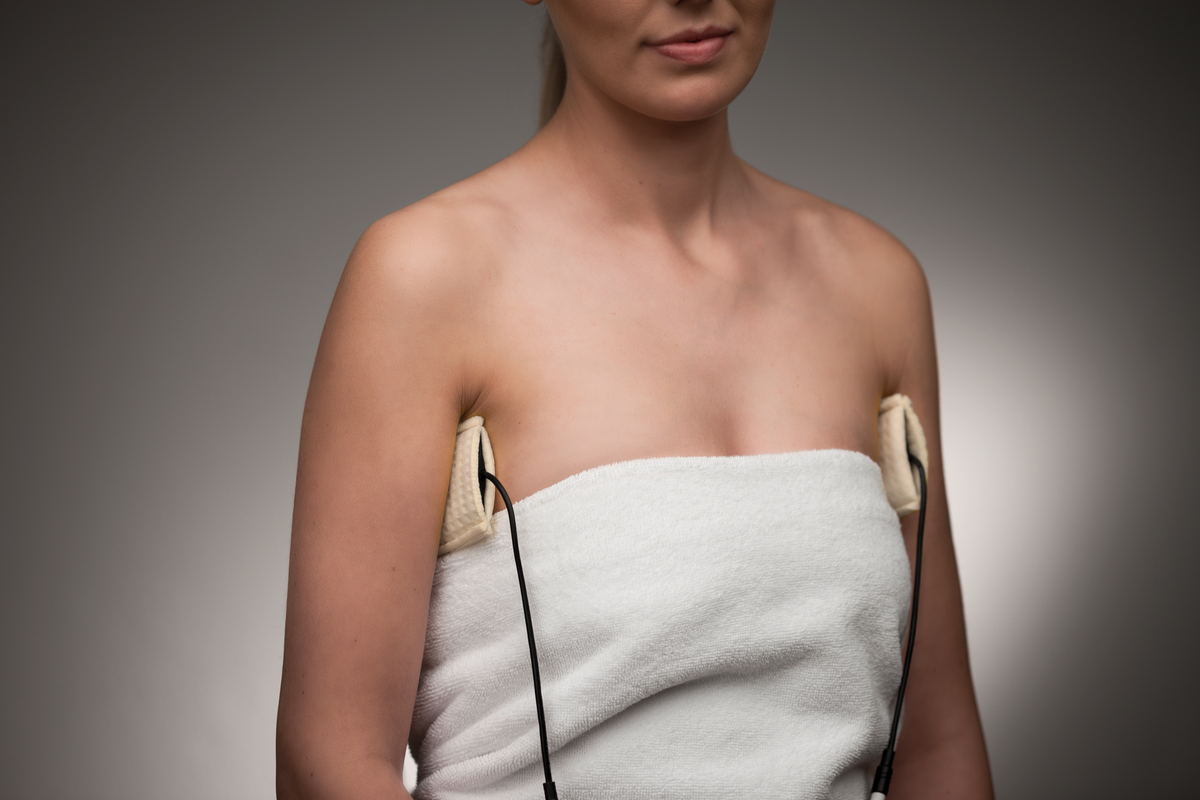
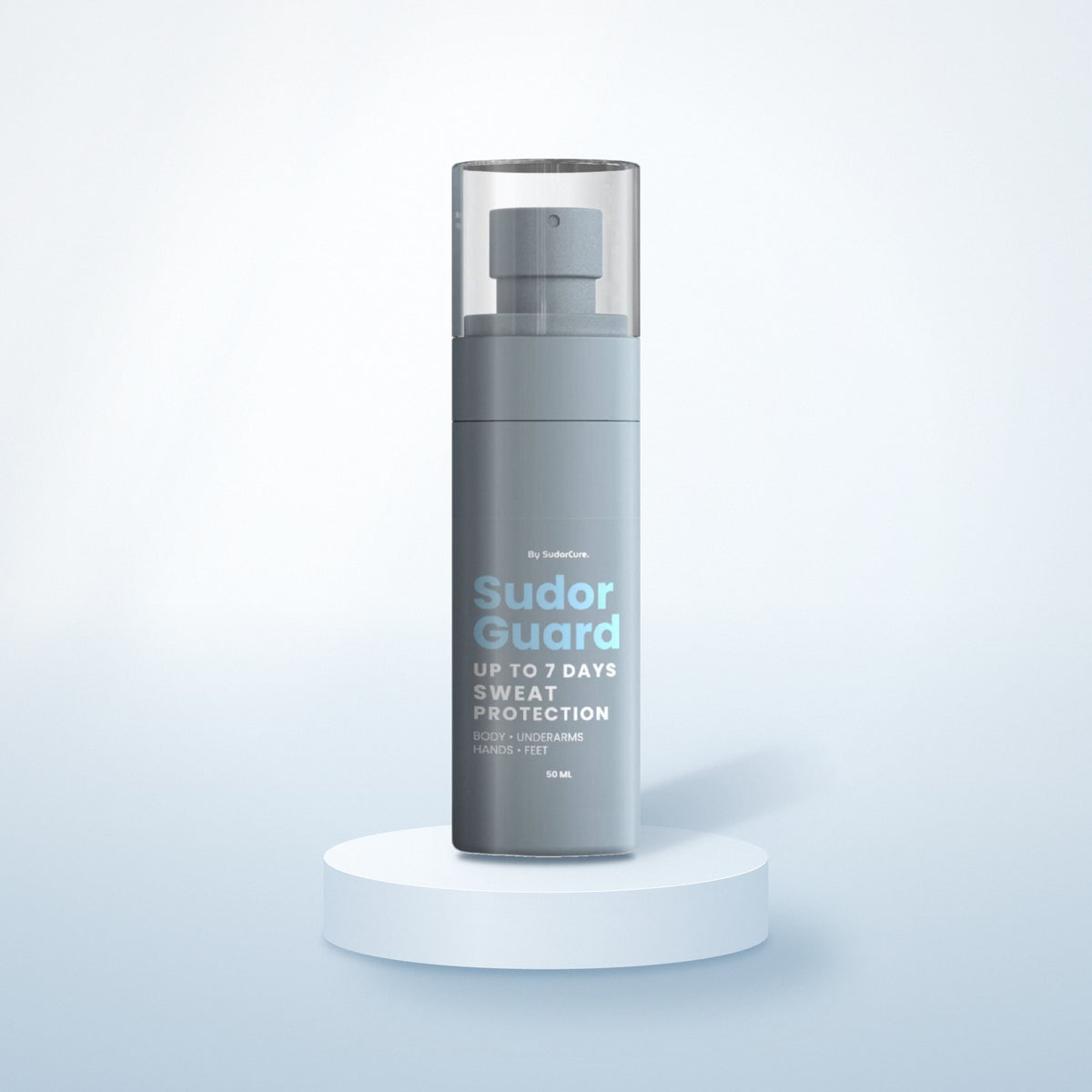
For underarm sweating in professional settings, SudorGuard is a simple place to start, and iontophoresis is effective on its own if you need more. For sweaty hands, which for many people is the most professionally disruptive form, iontophoresis with the Saalio® Hands and Feet device (DE Set) is the most consistently effective option. As results build, maintenance becomes progressively lighter, and many people find they can go weeks between sessions once their response is established. If you would rather test the approach before committing, the Hire Program lets you trial a device for three to four weeks, with the hire fee credited toward a device if you decide to buy.
Disclosure at Work
Whether to tell an employer or colleagues is a personal decision with no obligation either way. For most people in most roles, effective treatment makes the question moot, because the condition simply stops being visible. In roles with frequent close client contact or physical handshakes some people do choose to mention it, but that is rarely necessary once sweating is well controlled.
Getting the Right Support
If hyperhidrosis is significantly affecting your professional life and wellbeing, it is worth a conversation with your GP, who can confirm the diagnosis, discuss treatment options, and refer you to a dermatologist if appropriate. You are also welcome to email us at hello@sudorcure.com, and we are happy to help you find the right starting point.
References
- Kamudoni, P., et al. (2017). The impact of hyperhidrosis on patients' daily life and quality of life. Health and Quality of Life Outcomes, 15(1), 121.
- Strutton, D. R., et al. (2004). US prevalence of hyperhidrosis. Journal of the American Academy of Dermatology, 51(2), 241 to 248.
- International Hyperhidrosis Society. (2023). Work and career. Retrieved from www.sweathelp.org