Iontophoresis Maintenance: How to Keep Your Results Long-Term

Completing the initial phase of iontophoresis is a real milestone. The sweating is under control, possibly for the first time in years, and the question becomes how to keep it that way. The reassuring news is that maintenance is far lighter than the initial phase. Most people are surprised by how little upkeep it takes. This guide explains what the maintenance phase looks like and how to build it into your life sustainably.
Why Maintenance Sessions Are Needed
Iontophoresis works by temporarily calming the activity of the sweat glands, and that effect needs consistent reinforcement. If you stop treatment entirely, sweating gradually returns over a period of weeks to months. Maintenance sessions keep the effect going, without anywhere near the frequency of the initial phase.
What Maintenance Looks Like
Most people settle into one session per week at 15 to 20 minutes. Some find they can stretch to one session every ten days without any noticeable change, while others prefer a little more often to hold their preferred level of dryness. The right frequency genuinely varies from person to person, so a little experimentation helps you find yours. Because the initial phase has already brought the sweat glands to a calmer baseline, each maintenance session does far less work than those early ones did, which is why so few are needed to hold the result. Polarity reversal continues through maintenance, either on the AUTO setting or by switching manually between sessions.
What to Do If Sweating Starts to Return
If you notice sweating creeping back, often after a busy stretch or travel has disrupted your routine, a short top-up is usually all it takes. Returning to more frequent sessions for one to two weeks typically restores your results without having to work all the way back through the full initial phase.
If sweating returns quickly and consistently despite regular maintenance, it is worth emailing us at hello@sudorcure.com. Often a small adjustment to current settings, electrode placement, or session length makes a meaningful difference.
Making Maintenance Sustainable
The people who get the most from iontophoresis long-term are the ones who fold it into an existing routine rather than treating it as a separate chore. Pairing a session with something you already do, watching a show, reading, or winding down in the evening, makes the habit feel natural rather than effortful. For most people, one short session a week is a fair trade for consistently dry hands, feet, or underarms.
Adjusting for the Seasons
Maintenance needs shift with the weather. Many people need slightly more frequent sessions through summer, when heat amplifies sweat gland activity, and find they can drop back to fortnightly sessions through winter. Loosely tracking your results across the first few months helps you spot your own pattern, so you can run the lightest schedule that still holds your dryness.
Coming Back After a Break
Life disrupts routines, and a break of one to two weeks usually produces only a modest increase in sweating. Returning to daily or every-other-day sessions for a week or two generally restores results. If the break has run to several months, expect to work through a shortened version of the initial phase rather than jumping straight back to maintenance frequency. The response usually returns faster the second time, because your sweat glands have been conditioned before.
Electrode Care and Replacement
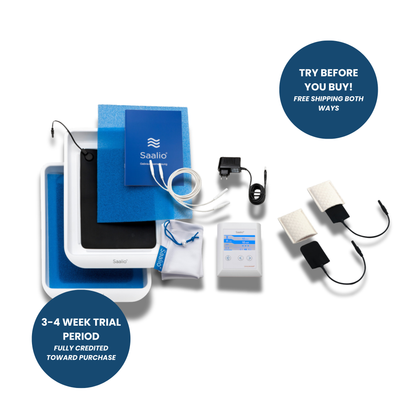
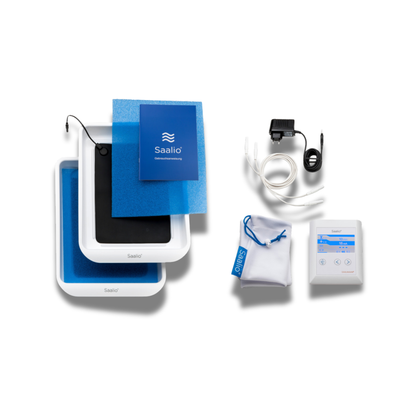
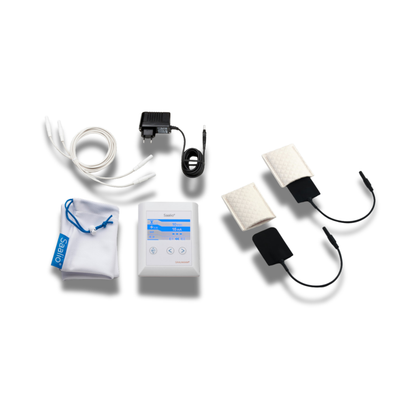
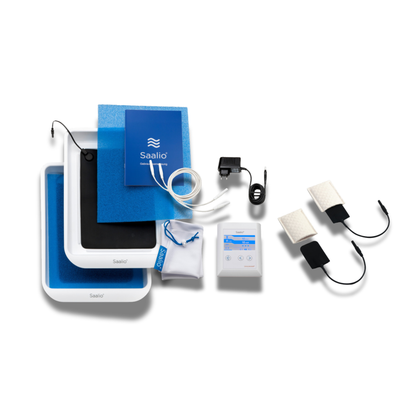
The electrodes used with the Saalio® are consumable components that gradually wear with regular use and need replacing over time. Signs include a change in the sensation during treatment, difficulty reaching current levels you previously tolerated, or visible wear on the electrode surfaces. Your Saalio® user manual gives specific guidance on replacement intervals. Rinsing trays and sponge components after each session and letting them dry fully before storage extends the life of every part, and for the DE Set, keeping the cable connectors and electrode leads dry when not in use helps too. Treating the device with the same routine care you would give any regularly used medical device keeps it in excellent condition throughout its four-year warranty period and beyond.
The Long-Term Perspective
Iontophoresis is best thought of as a long-term treatment routine rather than a course with a fixed end. It is well tolerated over years of regular use, and for most people one short session a week is a small, worthwhile trade for consistently dry hands, feet, or underarms, and the routine tends to become second nature within a couple of months. If you ever have questions about your maintenance routine or device care, email us at hello@sudorcure.com.
References
- Saalmann Medical GmbH & Co. KG. (2023). Saalio® User Manual (Version R23). Bad Oeynhausen, Germany.
- Togel, B., Greve, B., & Raulin, C. (2002). Current therapeutic strategies for hyperhidrosis. European Journal of Dermatology, 12(3), 219 to 223.
- Pariser, D. M. (2014). Hyperhidrosis (4th ed.). Elsevier.