How Sweat Blocking Actually Works: Antiperspirant, Iontophoresis, Botox and Surgery
If you have spent any time reading about excessive sweating, you will have met the same handful of treatments over and over: antiperspirants, iontophoresis, Botox (botulinum toxin), miraDry and surgery. What is rarely explained is what each one actually does to your sweat glands, and that is the most useful thing to understand. Sweat blocking is not one thing.
Each treatment works at a different depth in the skin, and once you can picture that, it is easy to see why some are simple to reverse and some are not, and why the sweat blocking you can do at home is the place most people should start.
What Sweat Blocking Is Trying to Switch Off
You have between two and four million sweat glands, packed most densely on the palms, soles, forehead and underarms. Each one is a tiny coiled tube deep in the skin with a narrow duct running up to a pore on the surface. The gland only makes sweat when a nerve tells it to, and the chemical messenger that nerve uses is the same one Botox blocks, which is why an injection best known for smoothing frown lines works on sweat at all.
People with hyperhidrosis do not have more sweat glands than anyone else. The glands are simply overactive, "stuck in the on position" as the International Hyperhidrosis Society puts it. So every sweat blocking treatment is trying to do one of four things: plug the pore, calm the gland, silence the nerve ending, or cut the wiring further up. Here they are, from the shallowest to the deepest.
What Is in Antiperspirant and How Does It Block Sweat?
People often ask how anti perspirant deodorants work, and the first thing to know is that the deodorant part does nothing to sweat. It deals with smell. What is in antiperspirant that matters is an aluminium salt, most often aluminium chlorohydrate or aluminium chloride, and everything else in the bottle is there to carry it, scent it and make it feel nice on skin.
Those salts do their sweat blocking by building a plug, and it is the simplest form of sweat blocking there is. When the aluminium meets the proteins in your sweat, it makes them clump together, and researchers who filmed this happening inside a model sweat duct saw the plug start on the walls of the duct just below the surface and thicken across the whole channel in about half an hour. Sweat is still made below the plug. It simply cannot reach the skin.
Because the plug sits near the surface, it does not last. It is shed as your skin renews itself, which is why antiperspirants have to be reapplied, and why applying at night makes sense: the plug forms while the gland is quiet.
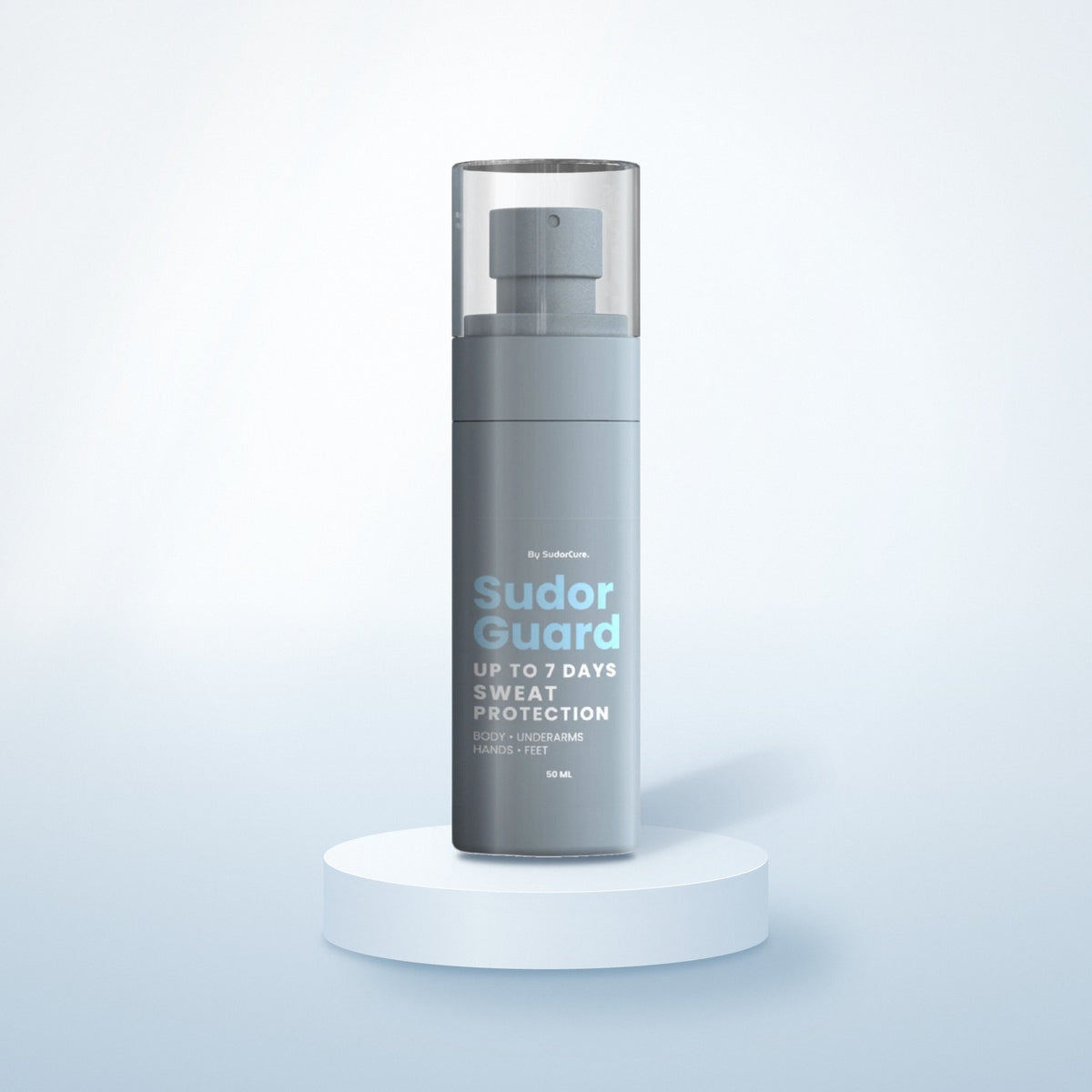
This is exactly how SudorGuard Antiperspirant Spray works. It forms a temporary aluminium chlorohydrate gel plug in the sweat duct, it is a cosmetic antiperspirant rather than a listed medicine, and it is the least invasive option on this list. If the aluminium itself worries you, our post on aluminium in antiperspirant covers what the research says.
How Does Iontophoresis Block Sweat Without a Plug?
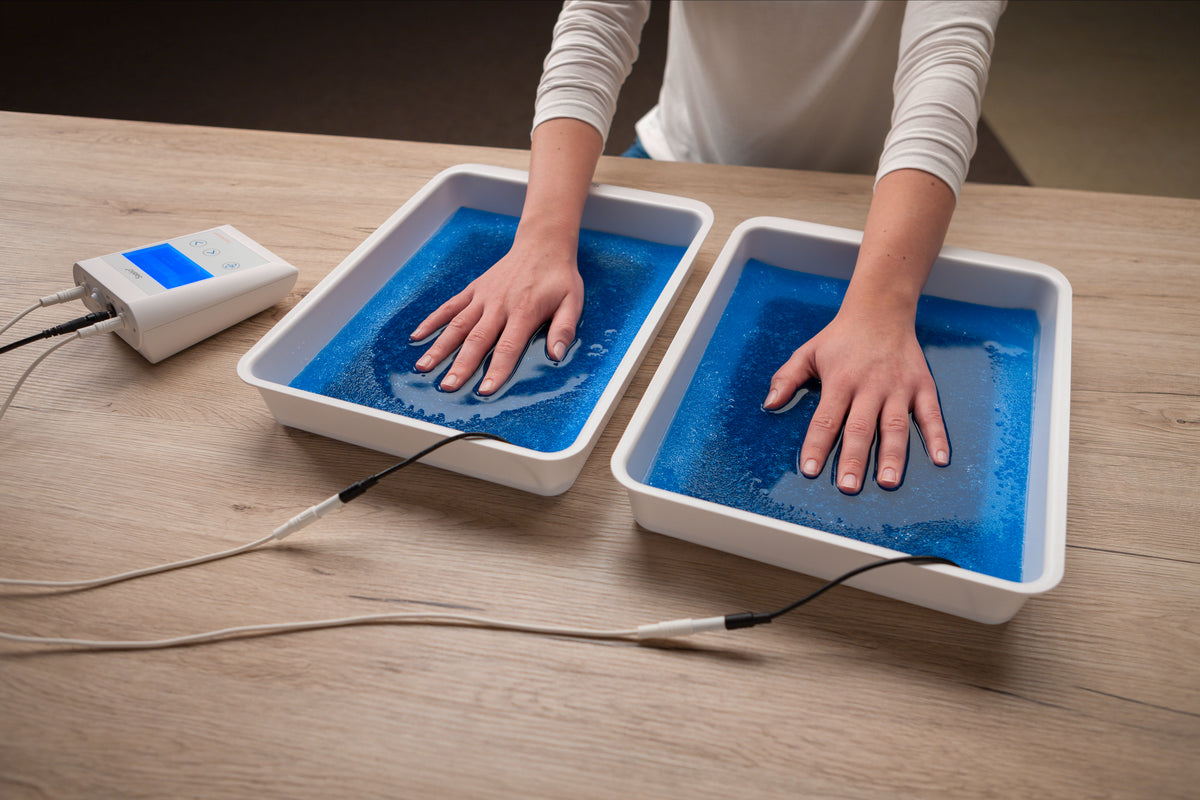
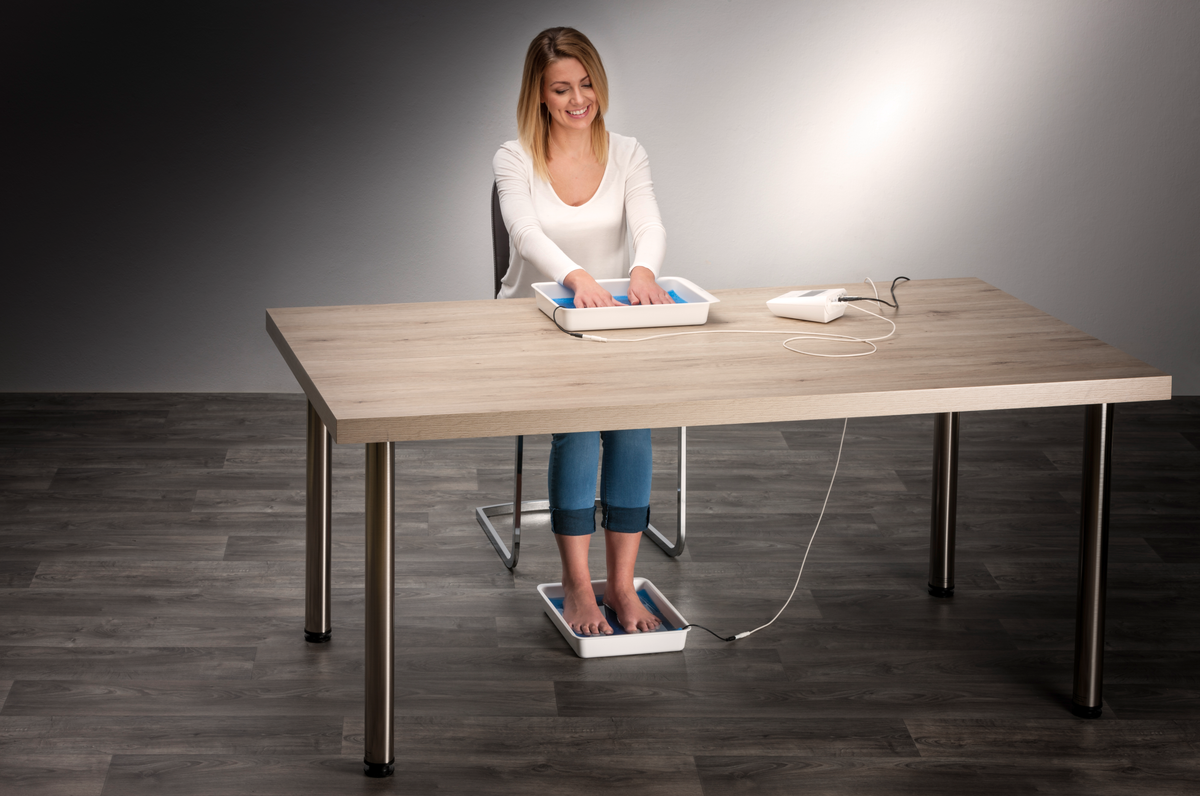
Iontophoresis passes a mild current through tap water into the skin of the hands, feet or underarms. You may have read that the minerals in the water build tiny plugs in the sweat ducts. That was an early theory, and some websites still repeat it, but when researchers examined sweat glands under a microscope after iontophoresis, nothing was blocking the duct. There is no plug.
The International Hyperhidrosis Society says the exact mechanism is not yet fully understood. The leading theory is that iontophoresis disrupts nerve signalling to the sweat glands, with no physical blockage and fully reversible, and other researchers think the current changes how the gland itself responds to being switched on. What matters to you is what those theories have in common. Nothing is blocked and nothing is destroyed, and the effect builds with regular use.
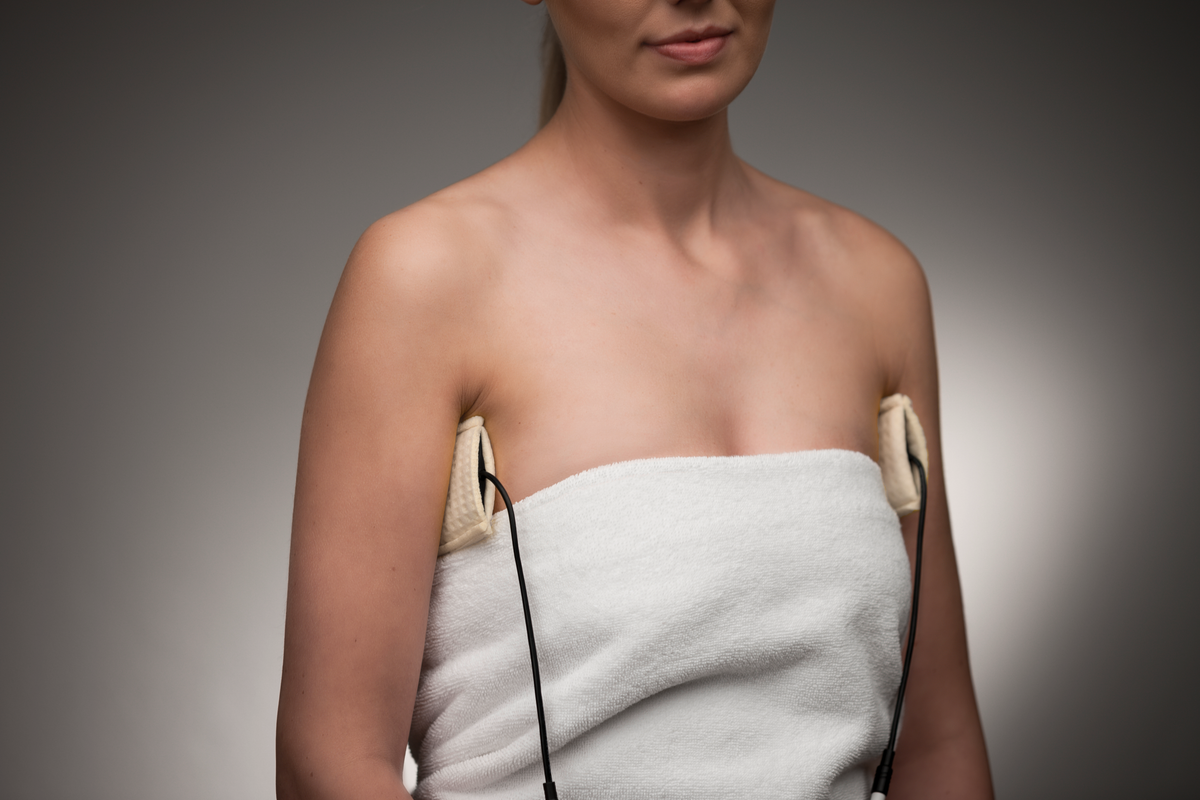
Because the current works slightly better on the side where it flows from the water into the skin, the Saalio® instructions ask you to change its direction regularly from your very first session, either by switching it yourself between sessions or by choosing the AUTO setting, which reverses it halfway through. That way both hands or both feet get the stronger effect.
And because nothing is blocked, the effect fades if you stop; in one study, sweating came back about five weeks after a course of treatment. That is why sweat blocking with iontophoresis has a maintenance routine, typically once a week for 15 to 20 minutes, and many people find they can go weeks between sessions as their response builds over time. Our post on how iontophoresis works covers the routine in full.
So an antiperspirant and an iontophoresis device are two different rungs of sweat blocking, one building a plug and the other changing how the gland responds, which is also why the Saalio® instructions ask for no antiperspirant on the underarms for at least five days before an underarm session.
How Does Botox Block Sweat?
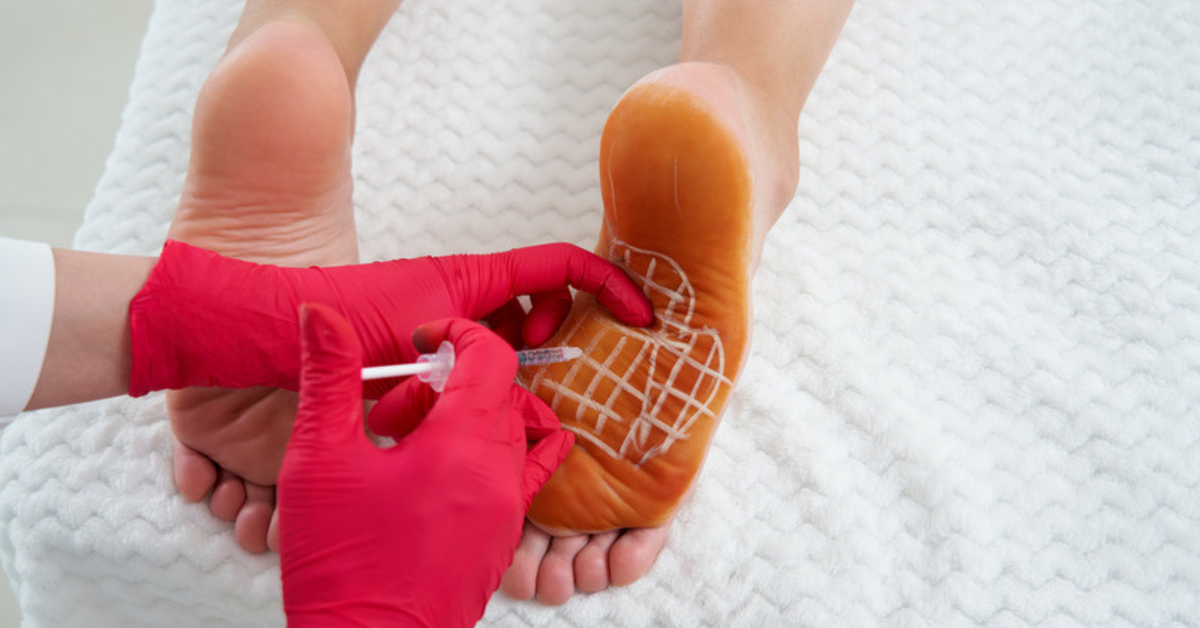
One level deeper, sweat blocking moves to the point where the nerve meets the gland. Botox is injected into the skin in a grid of tiny doses and disables a protein the nerve ending needs in order to release its messenger. No messenger, no signal, and no signal, no sweat. The gland itself is untouched.
Because the nerve ending slowly rebuilds that machinery, this kind of sweat blocking wears off, usually after six to nine months. That makes it an appointment you return to once or twice a year for as long as you want the result, and each round means 10 to 15 injections per underarm. The Australian product information also says rounds should not be repeated less than four months apart.
In Australia, Botox is registered for severe underarm sweating only, and it is a prescription medicine, so whether it suits you is a conversation for a doctor. For hands and feet there is no subsidy at all, and injections into the palms are painful.
How Does miraDry Work? Blocking Sweat Glands for Good
Every form of sweat blocking so far is reversible, which means you can stop and your glands go back to normal. The next two are not, and that is both their appeal and their risk.
miraDry takes sweat blocking a step further, using microwave energy to heat the layer of skin where the underarm glands sit, a few millimetres down. The glands are destroyed and replaced by scar tissue, and because sweat glands only form before birth, they do not grow back.
In the main trial, nearly nine in ten treated people had mild or no sweating a month later, and numbness or altered sensation in the area can last several months. It is for underarms only, and it is not subsidised in Australia.
How Does ETS Surgery Block Sweat?
The deepest form of sweat blocking does not touch the gland at all. ETS surgery (endoscopic thoracic sympathectomy) is a keyhole operation in the chest that cuts or clips the nerve chain beside the spine carrying the signal to the hands or underarms. It is sweat blocking at the source: the glands downstream never receive a signal again, which is why results for hands are immediate and lasting.
It is also why the main side effect is so common: the body often sweats more somewhere else instead, in anywhere from 3% to 98% of patients depending on how each study defined it. At its most severe, that new sweating comes in large amounts, even without heat.
The surgeons' own consensus says the operation should be considered irreversible, even when the nerve is clipped rather than cut. Less common complications include a drooping eyelid (Horner's syndrome, in up to 3% of people), and long-term slowing of the heart rate has also been reported. ETS is an option for a small number of people, and one of the two on this list that cannot be undone.
Which Sweat Blocking Treatment Should You Try First?
| Treatment | Where it acts | What it does | How long it lasts |
|---|---|---|---|
| Aluminium antiperspirant | Top of the sweat duct | Temporary protein plug | Days; sheds with skin turnover |
| Iontophoresis | The gland and its signalling | No plug; reversible change in response | Weeks; maintained typically once a week |
| Botox | Nerve ending at the gland | Blocks the nerve's messenger | Months; not repeated under four months |
| miraDry | The gland itself | Destroys glands by heat | Lasting; glands do not grow back |
| ETS surgery | Nerve chain in the chest | Interrupts the signal upstream | Irreversible; compensatory sweating |
The closer to the surface a treatment works, the easier it is to reverse, the more often you repeat it, and the lower the stakes if it does not suit you. That is the logic behind starting shallow, and it is why the two options you can use at home, without a prescription, an injection or an operation, are the ones most people should try first.
For milder underarm sweating, a clinical-strength antiperspirant such as SudorGuard Antiperspirant Spray is the simplest first step in sweat blocking, and the Saalio® Underarm Iontophoresis Device (AX Set) is there when you want more. For hands and feet, where antiperspirants are awkward and Botox injections are painful and unsubsidised, iontophoresis with a device like the Saalio® is where most clinical guidance starts.
Where to Start With Sweat Blocking at Home
If you would like to try the gland-level option before committing, the Try Before You Buy hire program puts a Saalio® device in your home for three or four weeks, and if you decide to buy within 30 days of your hire ending, your hire fee comes off the purchase price.
If underarm sweating is the main concern, SudorGuard Antiperspirant Spray is an easy place to begin, and our post on antiperspirant vs deodorant explains why a deodorant alone will not do the job. If you are not sure which rung you are on, email us at hello@sudorcure.com and we will help you work it out.
References
- Allergan Australia. BOTOX (botulinum toxin type A) Australian Product Information, version 21, 25 November 2024. Available via the TGA Product Information search (https://www.tga.gov.au/products/australian-register-therapeutic-goods-artg/product-information) and allerganaesthetics.com.au
- Bandla M. Antiperspirants: types, use, and cautions. DermNet. Updated August 2022. https://dermnetnz.org/topics/antiperspirant
- Cerfolio RJ, De Campos JRM, Bryant AS, et al. The Society of Thoracic Surgeons expert consensus for the surgical treatment of hyperhidrosis. Annals of Thoracic Surgery. 2011;91(5):1642–1648. https://www.sts.org/sites/default/files/documents/ExpertConsensus_Surgical_Treatment_Hyperhidrosis.pdf
- DermNet. Iontophoresis. 2015. https://dermnetnz.org/topics/iontophoresis
- Eldridge D. Antiperspirant vs deodorant: an expert explains the key difference. ScienceAlert, 19 December 2025 (republished from The Conversation). https://www.sciencealert.com/antiperspirant-vs-deodorant-an-expert-explains-the-key-difference
- Galey J-B, Ristori S, Prevost M, et al. Real time observation of the interaction between aluminium salts and sweat under microfluidic conditions. Scientific Reports. 2021;11:6376. https://doi.org/10.1038/s41598-021-85691-8
- Glaser DA, Coleman WP, Fan LK, et al. A randomized, blinded clinical evaluation of a novel microwave device for treating axillary hyperhidrosis. Dermatologic Surgery. 2012;38(2):185–191. https://doi.org/10.1111/j.1524-4725.2011.02250.x (trial figures as summarised by the International Hyperhidrosis Society, https://www.sweathelp.org/treatments-hcp/miradry.html)
- International Hyperhidrosis Society. Iontophoresis (clinician page). https://www.sweathelp.org/treatments-hcp/iontophoresis.html
- International Hyperhidrosis Society. Understanding sweating. https://www.sweathelp.org/home/understanding-hyperhidrosis.html
- Jabbari B, et al. Botulinum toxin in dermatology. Toxins. 2013;5(4):821–840. https://www.mdpi.com/2072-6651/5/4/821
- Pariser DM, Ballard A. Topical therapies in hyperhidrosis care. Dermatologic Clinics. 2014;32(3):485–490. https://www.sweathelp.org/pdf/2014%20-%20Pariser%20&%20Ballard%20-%20Topical%20Therapies%20in%20HH%20Care.pdf
- Sánchez-Carpintero I, Martín-Gorgojo A, Ruiz-Rodríguez R. Microwave treatment for axillary hyperhidrosis and bromhidrosis. Actas Dermo-Sifiliográficas. 2017;108(5):418–422. https://doi.org/10.1016/j.adengl.2017.03.029
- Siah TW, Hampton PJ. The effectiveness of tap water iontophoresis for palmoplantar hyperhidrosis using a Monday, Wednesday, and Friday treatment regime. Dermatology Online Journal. 2013;19(3):14. https://escholarship.org/uc/item/8nq6f8t1
- Trindade de Almeida AR, Montagner S. Botulinum toxin for axillary hyperhidrosis. Dermatologic Clinics. 2014;32(3):495–504. https://pubmed.ncbi.nlm.nih.gov/25152343/ (full text hosted by the International Hyperhidrosis Society: https://www.sweathelp.org/pdf/2014%20-%20Trindade%20-%20Botulinum%20Toxin%20for%20Axillary%20Hyperhidrosis.pdf)