Palmar Hyperhidrosis: A Complete Guide to Sweaty Hands in Australia and New Zealand
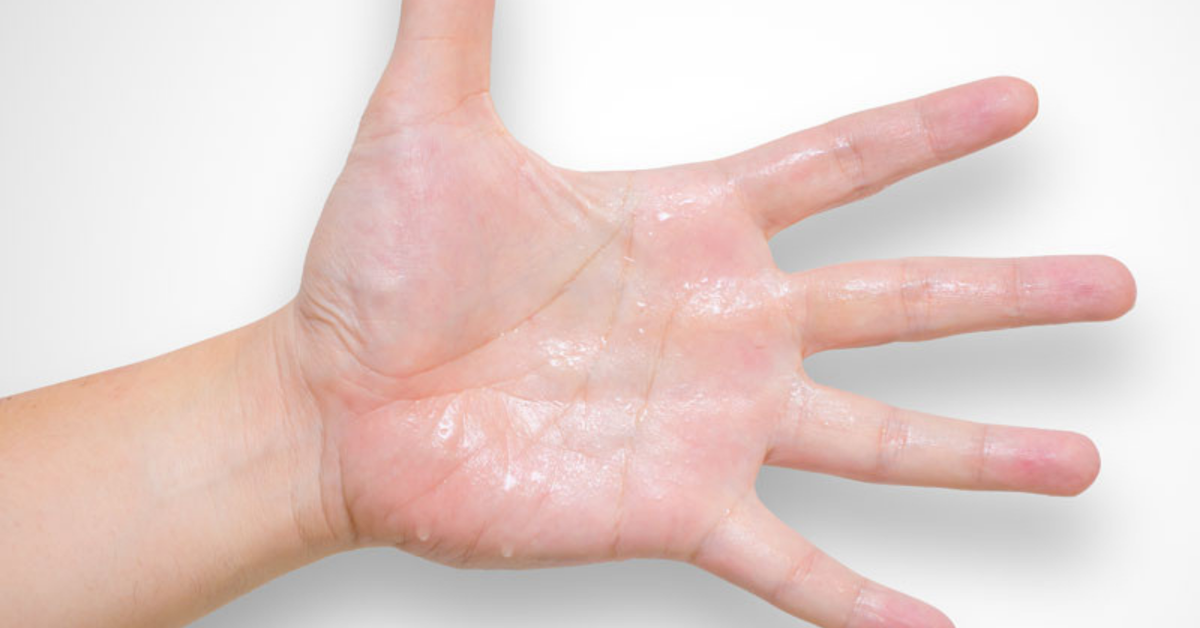
Palmar hyperhidrosis, excessive sweating of the hands, is one of the most common and most socially disruptive forms of hyperhidrosis. This guide covers what you need to understand the condition and to navigate your treatment options in Australia and New Zealand.
What Is Palmar Hyperhidrosis?
Palmar hyperhidrosis is excessive, hard-to-control sweating of the palms, caused by overactive eccrine sweat glands driven by an overreactive sympathetic nervous system, rather than by an underlying illness, anxiety, or overheating. It is typically bilateral, affecting both palms fairly symmetrically, and it is not a sign of poor hygiene or of being unusually nervous, a misconception that adds needless embarrassment to an already frustrating condition. In most cases it is primary hyperhidrosis, genetic in origin, and it often appears in childhood or adolescence. An estimated 4% of Australians live with hyperhidrosis in some form, and palmar is one of the most common presentations, yet it remains under-discussed and under-treated.
How It Affects Daily Life
The impact is unusually broad because hands are involved in nearly everything: writing that smears, touchscreens and keyboards that misfire, the anxiety around a handshake that can shape how someone shows up professionally, and the hesitation before holding a partner's hand. Over time people build extensive adaptation strategies. They work up to a point, but they are exhausting, and a sign the condition is taking more bandwidth than it should.
When It Is Worth a Closer Look
Most palmar hyperhidrosis is primary and long-standing. Sweating that starts suddenly, affects only one hand, or comes alongside night sweats or unexplained weight change is worth raising with a GP, since it can point to a secondary cause worth ruling out before settling on a treatment. The full checklist doctors use is in our guide to diagnosing focal hyperhidrosis.
Treatment Options Compared
Several options exist, and for the hands specifically they are not equal. A fuller side-by-side sits in our treatments compared guide, but in brief:
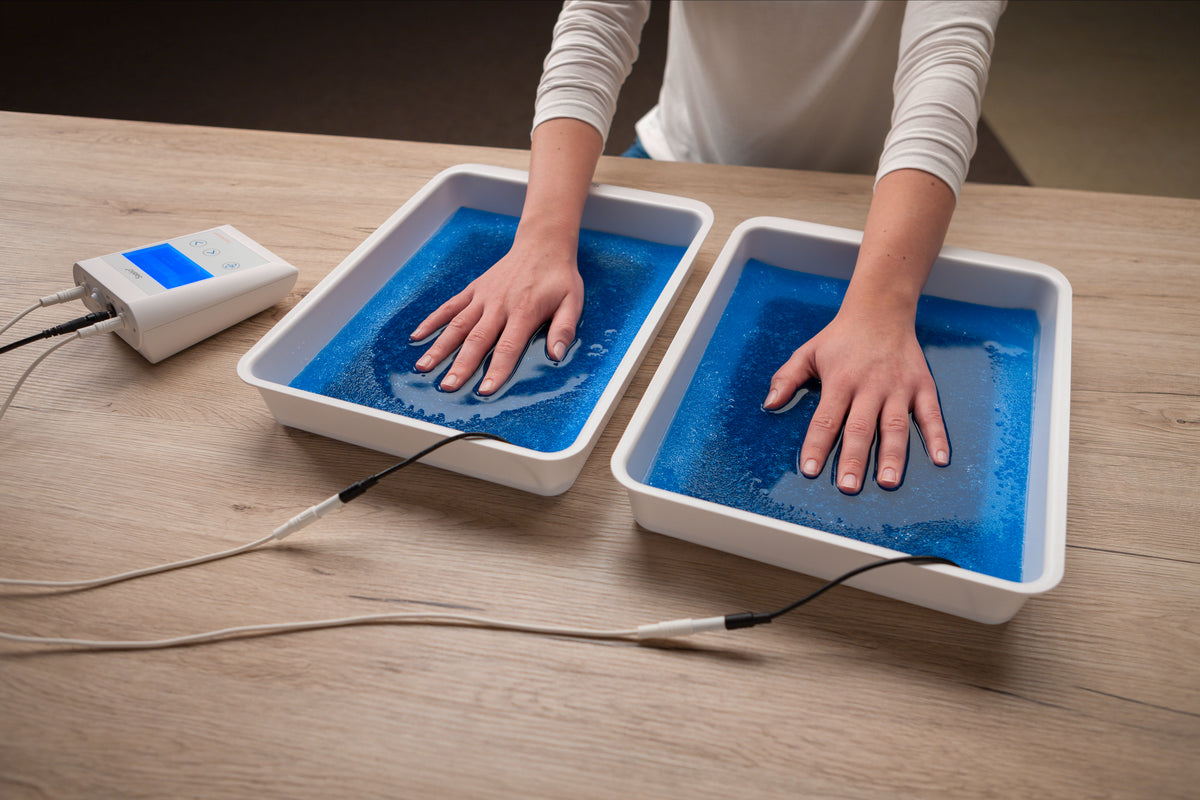
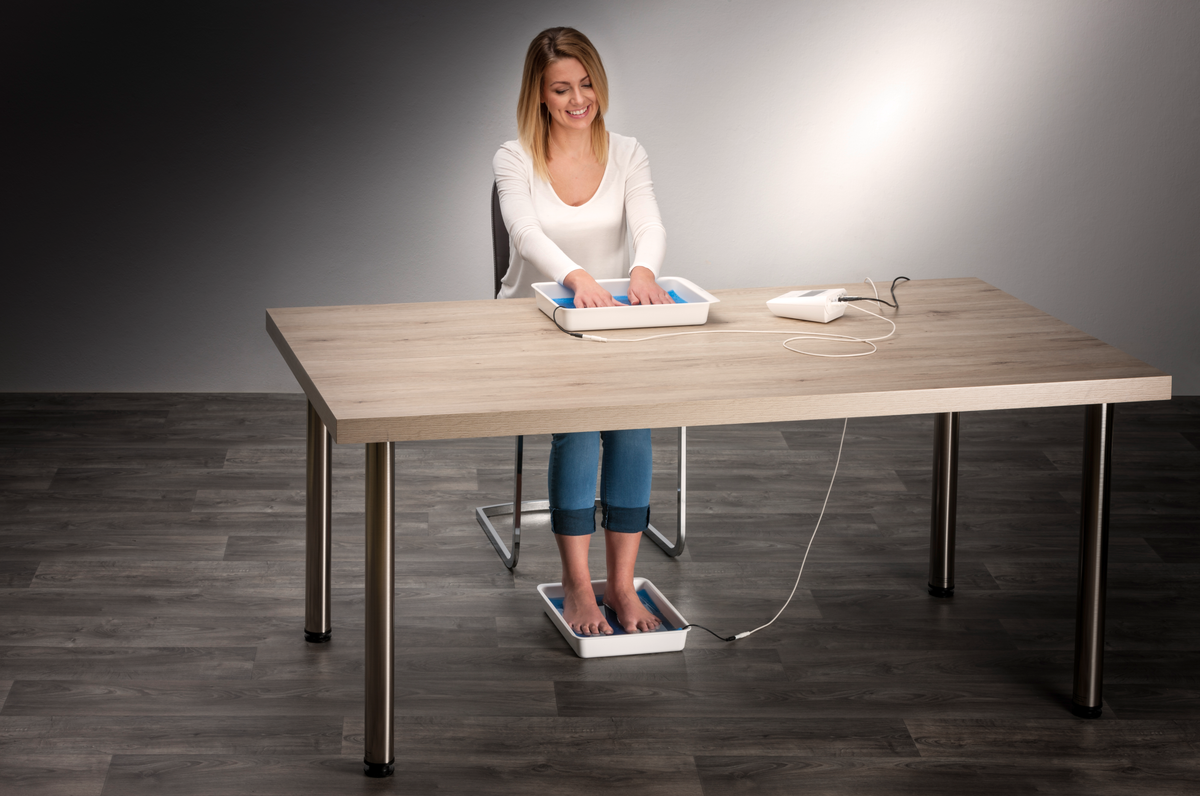
- Iontophoresis. For palmar hyperhidrosis, iontophoresis is widely considered the most effective non-invasive treatment. Hands rest in shallow trays of tap water while a mild current flows through; over an initial phase of sessions at least every second day (daily if the skin tolerates it) across about 4 to 6 weeks, sweat output drops significantly. The Saalio® Hands and Feet device (DE Set) is what we use for hands, with adjustable current and a four-year warranty.
- Botulinum toxin injections. Effective, but noticeably more painful in the hands than the underarms because of the density of nerve endings. Results last four to six months and need repeating, so it is usually considered after iontophoresis rather than before.
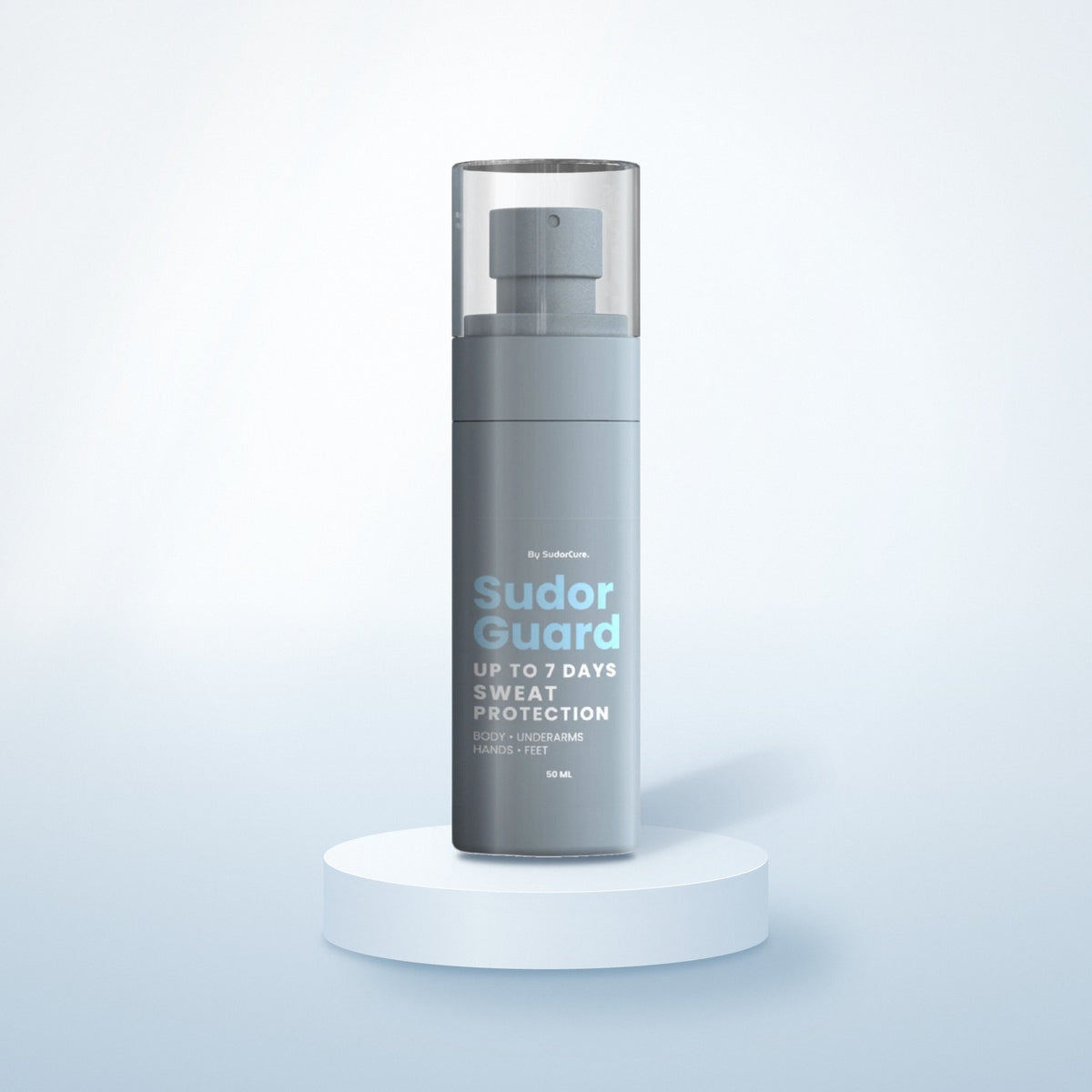
- Clinical-strength antiperspirants. Helpful for mild hand sweating, but usually not enough for moderate to severe cases.
- Surgery (ETS). Cutting the nerves that trigger hand sweating can produce dramatic results, but a significant proportion of people develop compensatory sweating elsewhere on the body, which can be severe and is often irreversible. It is considered a last resort.
Living With Sweaty Hands Day to Day
While iontophoresis builds results, a few small habits help. A cloth or tissue to dry the hands before a handshake is simple and undetectable; quick-drying pens or slightly rougher paper reduce smearing; and a stylus takes the frustration out of touchscreens. These are short-term aids rather than solutions, and for a focused walkthrough of treating hand sweating specifically, see our guide to sweaty hands treatment. For the hands, iontophoresis remains the most reliably effective option.
Getting Assessed in Australia and New Zealand
A GP or dermatologist can confirm the diagnosis, rule out any secondary causes, and help map a treatment path, including a dermatology referral if appropriate. A dermatologist may grade severity with the Hyperhidrosis Disease Severity Scale (HDSS), which runs from 1 (never noticeable, never interferes) to 4 (intolerable, always interferes). A score of 3 or 4 generally points to iontophoresis as first-line, and even a 2, tolerable but sometimes interfering, is a reasonable trigger to start if the impact on daily life is meaningful. You are also welcome to email us at hello@sudorcure.com to work out which approach suits you.
The Long-Term Picture
Iontophoresis is a long-term treatment, and the encouraging part is that the commitment eases: maintenance requirements lighten over time, and many people find they can go weeks between sessions as their response builds. If you would like to try before buying, the Hire Program lets you trial the device first, with the fee credited toward a purchase.
References
- Ro, K. M., et al. (2002). Palmar hyperhidrosis: evidence of genetic transmission. Journal of Vascular Surgery, 35(2), 382 to 386.
- Haider, A., & Solish, N. (2005). Focal hyperhidrosis: diagnosis and management. Canadian Medical Association Journal, 172(1), 69 to 75.
- Kreyden, O. P. (2004). Iontophoresis for palmoplantar hyperhidrosis. Journal of Cosmetic Dermatology, 3(4), 211 to 214.
- Streker, M., et al. (2012). Tap water iontophoresis. JDDG: Journal der Deutschen Dermatologischen Gesellschaft, 10(3), 163 to 169.